
How does Renewable Energy actually work?
Digitise renewable energy carbon programmes — installation commissioning, generation-meter logging and grid-displacement records — built for AMS-I.A small-scale methodology reporting. Here's the field-to-credit process, and what's different about running it in India versus the global market.
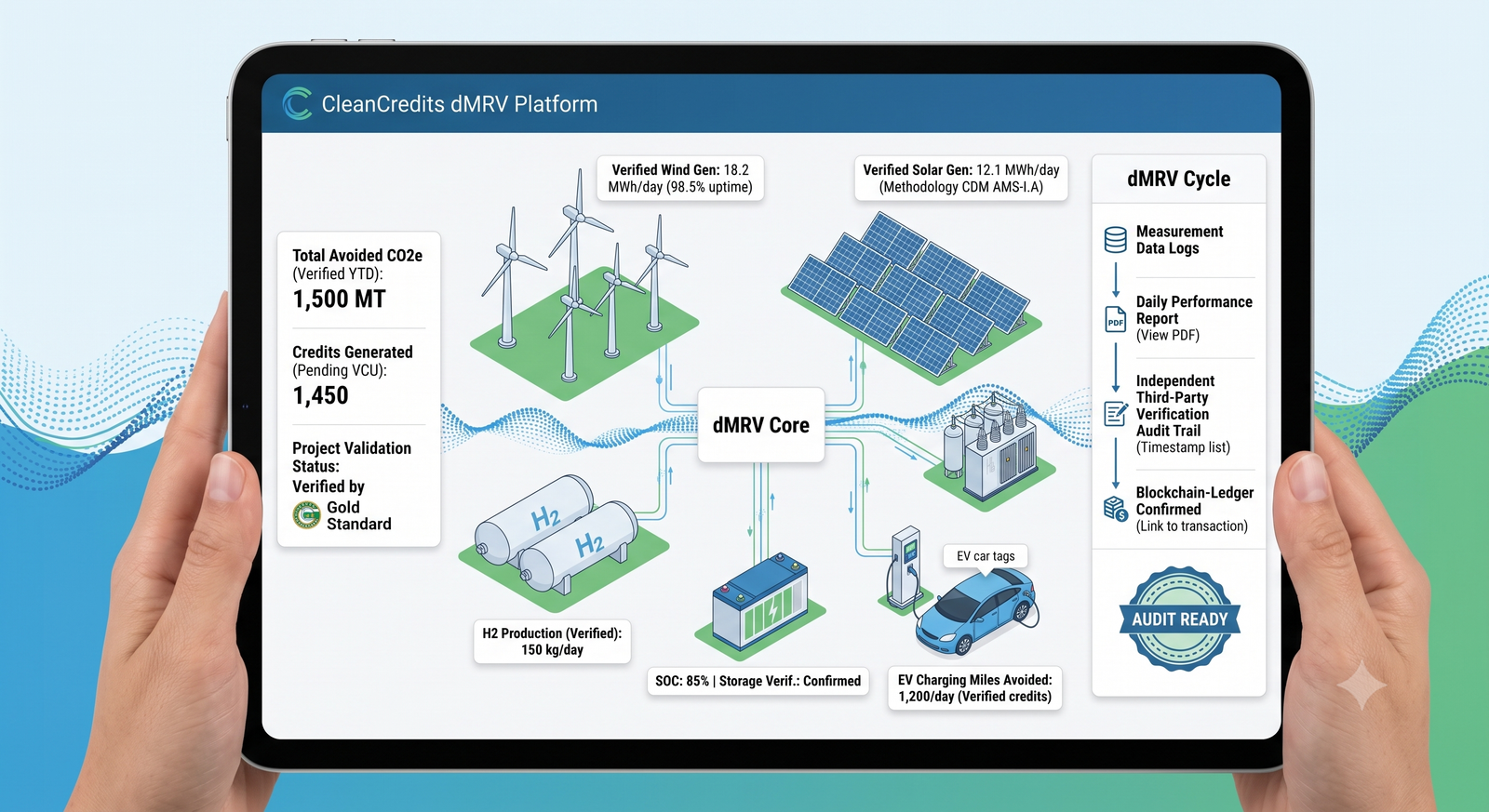
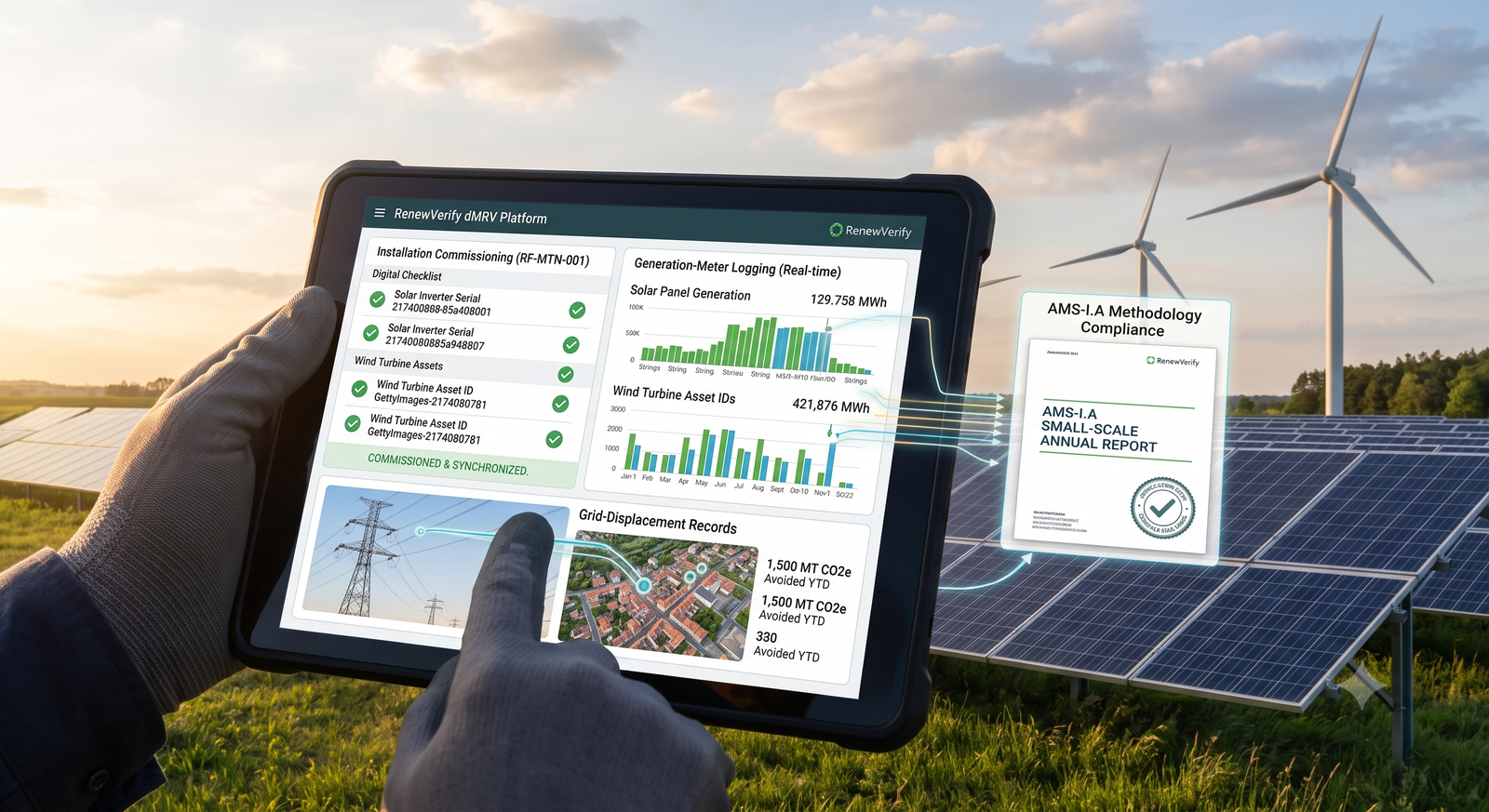
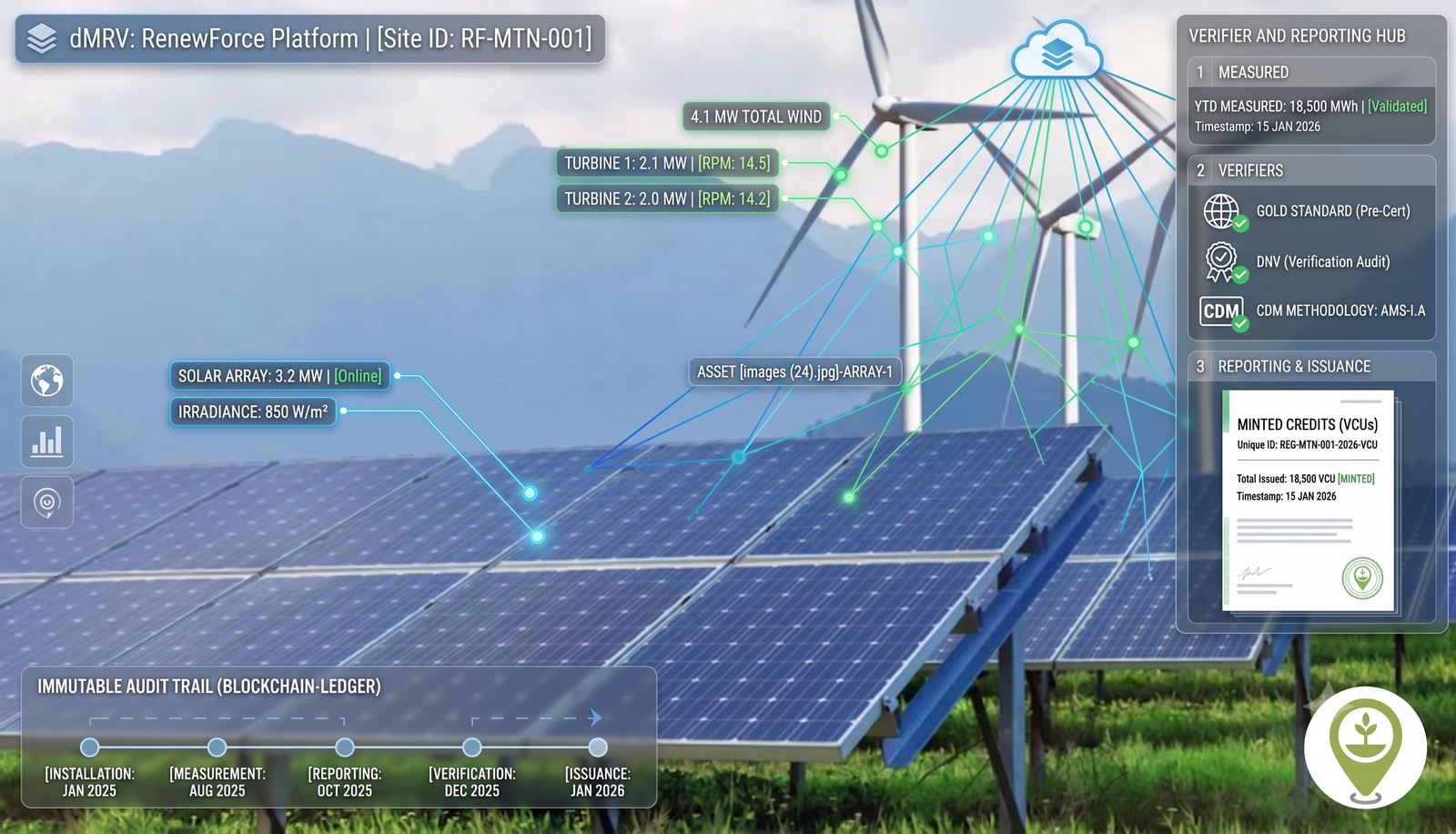
From renewable energy installations to an issued credit
01
Register the site
Installation location, equipment type and capacity are logged for solar, small hydro, biomass or similar generation.
02
Commission the installation
Commissioning date, equipment specification and grid-connection details are documented with photo evidence.
03
Meter generation
Generation output is metered on an ongoing, scheduled basis rather than sporadic site visits.
04
Compare against the grid baseline
Metered generation is compared to the relevant grid emissions factor to calculate displaced emissions.
05
Verify metered data
A verifier checks metering records against commissioning and site registration data.
06
Issue credits — where additionality still holds
Credits are issued under AMS-I.A only where the project can still demonstrate it wouldn't have happened without carbon finance.
How renewable energy works in India
India's renewable-energy carbon-credit landscape has changed substantially as grid-connected solar and wind became commercially competitive on their own — the single most important thing to understand about this methodology in India today.
Major registries (Gold Standard, Verra) have restricted or retired new crediting for large grid-connected renewable projects in India because falling costs undermine the 'wouldn't have happened without carbon finance' additionality test.
The most credible remaining renewable-energy carbon activity in India tends to be distributed or off-grid — mini-grids and decentralised solar serving communities without reliable grid access.
India's Renewable Energy Certificate (REC) mechanism and the PAT scheme are separate, parallel instruments from voluntary carbon credits and shouldn't be conflated with them.
The domestic Carbon Credit Trading Scheme (CCTS) is a newer, India-specific compliance mechanism increasingly relevant to how renewable and efficiency projects here are financed going forward.
How renewable energy works in the global market
Grid-connected renewable energy was historically one of the largest categories in the CDM and early voluntary carbon markets, especially in India and China, but is now the category facing the most additionality scrutiny worldwide.
Falling renewable costs and government mandates in many countries mean utility-scale grid projects increasingly fail the additionality test that carbon credits require.
Credible renewable-energy credits today are concentrated in off-grid and underserved-market contexts — for example distributed solar mini-grids in Sub-Saharan Africa.
Registries have progressively tightened or discontinued crediting for large grid-tied renewable projects in mature and rapidly-decarbonising grids.
Buyers and registries alike now scrutinise renewable-energy credit claims more heavily than almost any other category, given this history.
Renewable Energy — frequently asked questions
How Renewable Energy dMRV works with TrueCarbon, from data capture to verification.
Does TrueCarbon support AMS-I.A small-scale renewable energy reporting?
The configurable field schema captures installation commissioning and generation-meter data mapped to AMS-I.A's monitoring requirements for distributed renewable energy sites.
Can TrueCarbon handle a rollout across multiple installers?
Yes. Installers, equipment types and site categories are all configurable, so a multi-installer rollout stays in one register instead of fragmenting.
How other programmes work
Ready to start
Running a Renewable Energy programme?
Talk to us about your programme's stage — whether you're mid-registration or just scoping the methodology.