
How does REDD+ actually work?
Manage REDD+ forest conservation programmes with GPS project boundaries, patrol and threat monitoring, community benefit-sharing records and deforestation-driver evidence built for VM0007 and VM0015. Here's the field-to-credit process, and what's different about running it in India versus the global market.
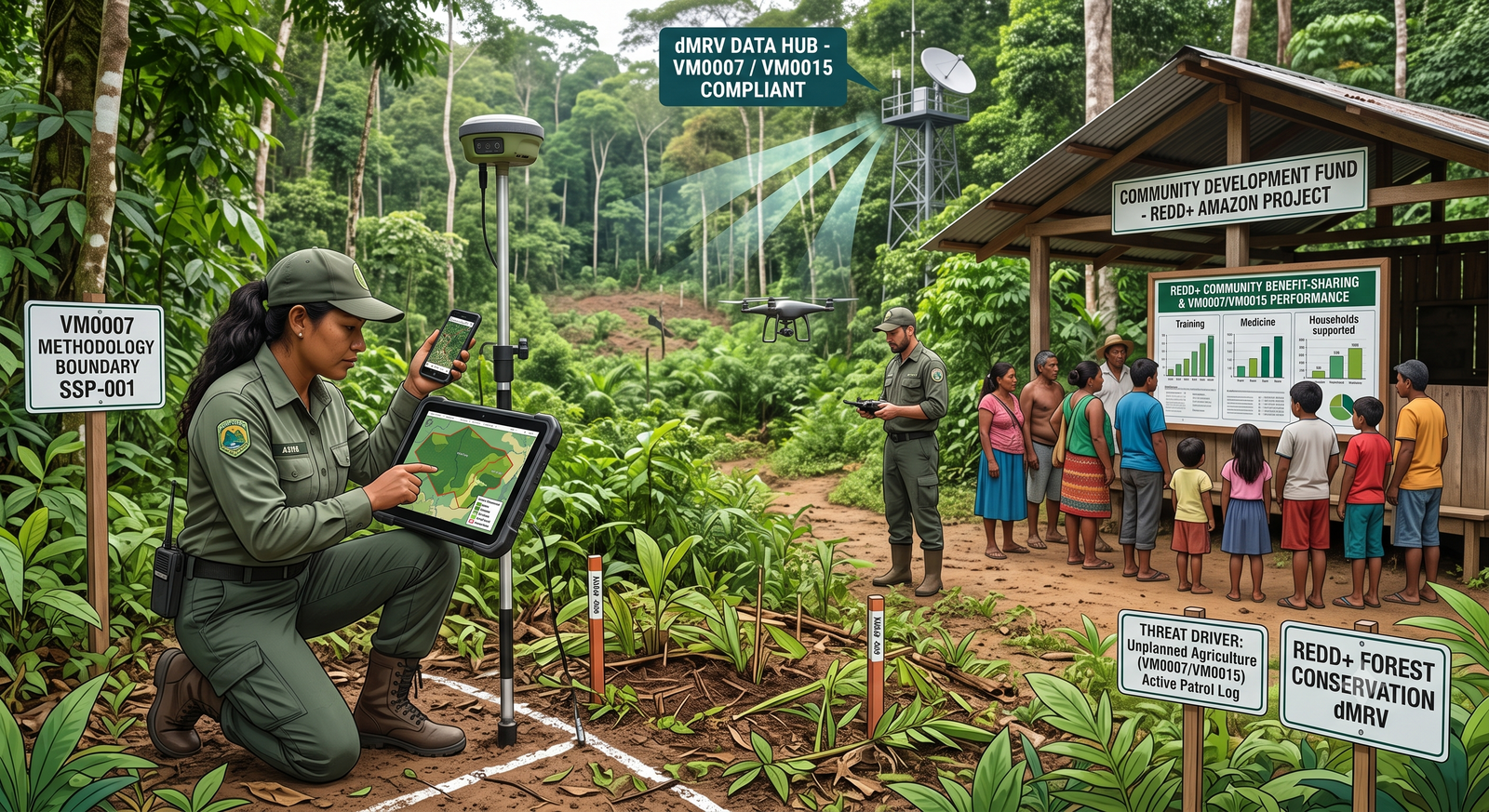
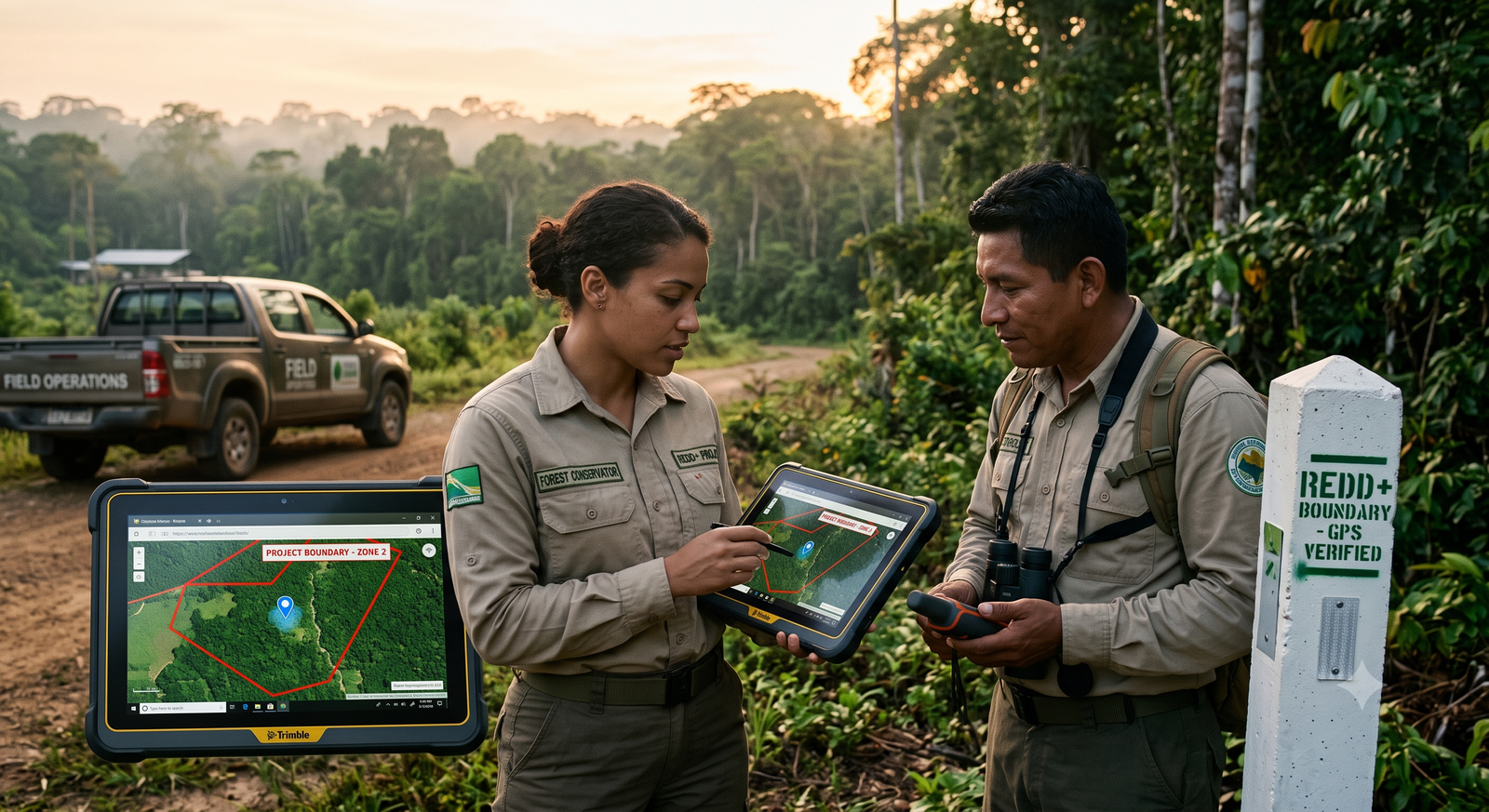
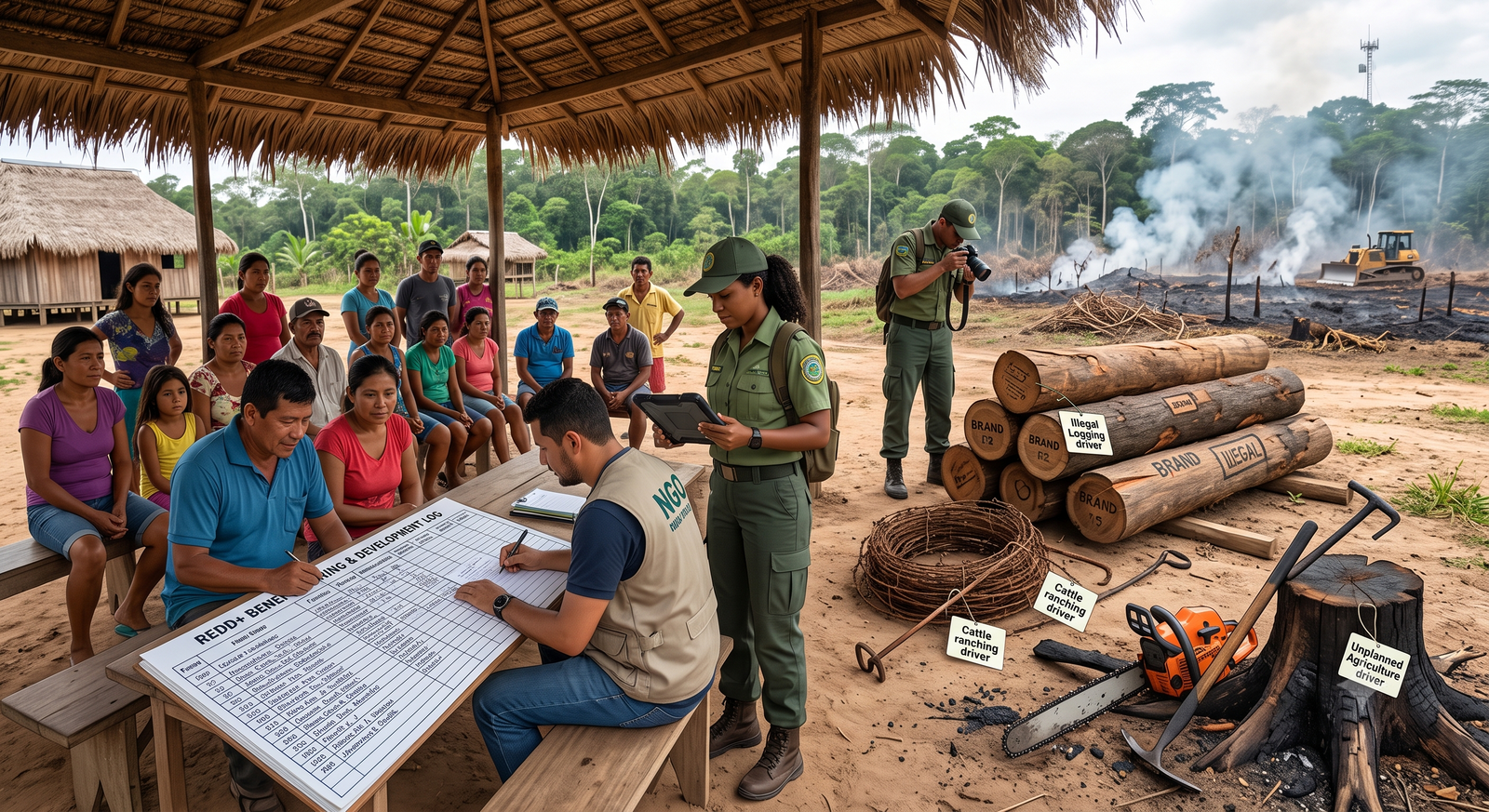
From forest conservation projects to an issued credit
01
Define the project area and baseline
The project boundary and a historical deforestation reference region are established to model what would happen without the project.
02
Design conservation interventions
Patrol programmes, community agreements and alternative-livelihood activities are put in place to reduce deforestation drivers.
03
Run patrols and log threats
Rangers and community monitors record routes and any logging, fire or encroachment incidents as they occur.
04
Track deforestation against baseline
Remote sensing and ground data are compared to the reference scenario to quantify avoided deforestation.
05
Share community benefits
Payments and in-kind benefits are distributed to registered stakeholders as part of the project's social case.
06
Verify and issue credits
A verifier reviews boundary, patrol, monitoring and benefit-sharing evidence before credits are issued.
How redd+ works in India
Most Indian forest is government-owned, so REDD+ here operates more through national forest policy than the voluntary-carbon-market project model common elsewhere.
India's REDD+ activity connects to national programmes like the Green India Mission and its REDD+ readiness work under the UNFCCC framework, rather than large standalone VCM projects.
Joint Forest Management (JFM) committees and community forest rights areas are where India-specific REDD+-adjacent conservation activity is most active.
Land tenure clarity — who holds rights over a given forest patch — is a bigger practical gating factor for private REDD+ projects in India than in countries with more private forest ownership.
Where REDD+-style conservation finance does reach India, it tends to pair with agroforestry or community-forestry co-benefits rather than large intact-forest concessions.
How redd+ works in the global market
REDD+ is one of the largest and most closely scrutinised categories in the voluntary carbon market, concentrated in a handful of major forest basins.
The Amazon basin, Congo basin and Indonesia host the largest volume of REDD+ credit issuance globally.
Verra's VM0007/VM0015 and the broader REDD+ framework have faced significant media and scientific scrutiny over baseline inflation in recent years.
The market is shifting toward more conservative jurisdictional-scale approaches, such as ART TREES, rather than smaller project-level baselines, partly in response to that scrutiny.
Buyers now typically expect stronger remote-sensing corroboration of on-the-ground patrol and monitoring data than in earlier REDD+ project generations.
REDD+ — frequently asked questions
How REDD+ dMRV works with TrueCarbon, from data capture to verification.
Does TrueCarbon support VM0007 and VM0015 REDD+ methodologies?
The configurable field schema captures project boundaries, patrol data, threat monitoring and benefit-sharing records — the core evidence categories VM0007 and VM0015 monitoring plans call for.
Can community rangers use the platform without reliable internet?
Yes. The mobile app is offline-first; patrol and threat data sync automatically once a ranger is back in coverage.
More on this methodology
How other programmes work
Ready to start
Running a REDD+ programme?
Talk to us about your programme's stage — whether you're mid-registration or just scoping the methodology.