
How does Cookstoves actually work?
Digitise clean cookstove distribution and usage monitoring — household enrolment, stove serial tracking, usage surveys and durability checks — built for AMS-II.G reporting. Here's the field-to-credit process, and what's different about running it in India versus the global market.
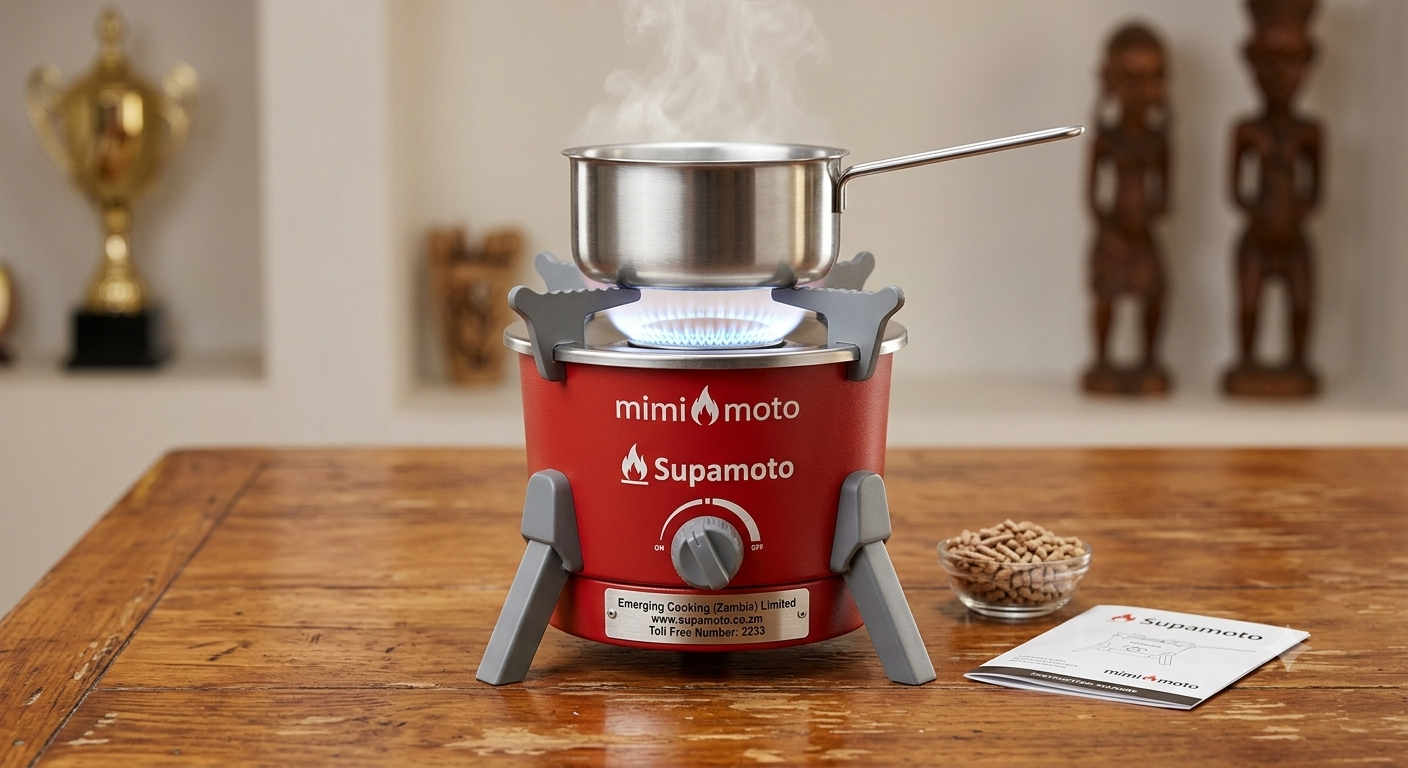
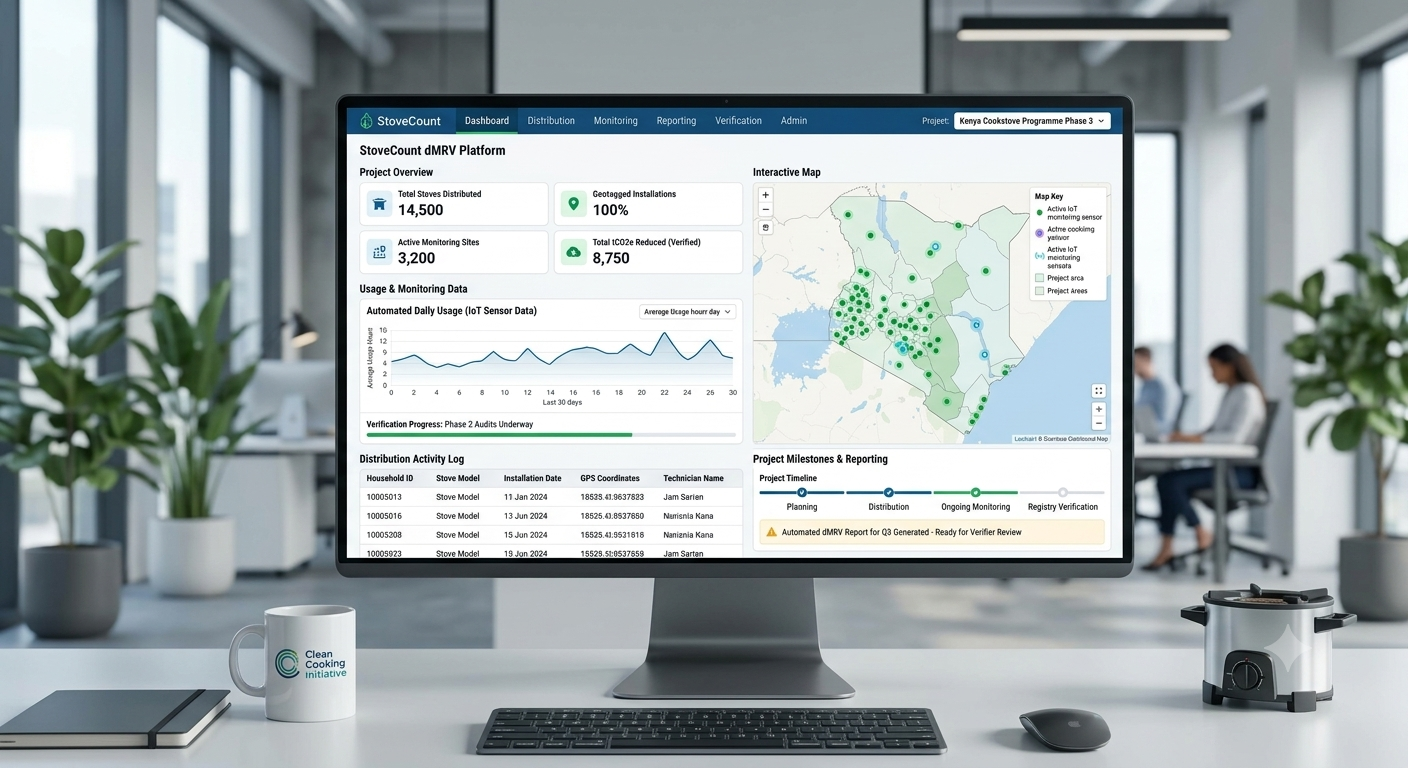
From cookstove distribution programmes to an issued credit
01
Survey the baseline
Existing cooking fuel and stove use is documented per household before distribution begins.
02
Distribute certified stoves
Clean cookstoves are distributed and linked to a specific household by serial number.
03
Monitor usage
Scheduled surveys or sensors confirm the stove is actually being used, not just sitting unused.
04
Calculate fuel and emissions savings
Usage data feeds the AMS-II.G calculation of fuel saved and emissions avoided versus the baseline stove.
05
Check durability and continued use
Follow-up visits confirm stoves are still functional and in use well after distribution.
06
Verify and issue credits
A verifier reviews enrolment, distribution and usage evidence before credits are issued.
How cookstoves works in India
India has one of the longest histories of carbon-financed cookstove programmes globally, sitting alongside — and sometimes overlapping with — the government's own clean-cooking push.
The Ujjwala Yojana LPG-connection scheme has shifted many households toward LPG, which changes the baseline cookstove projects must measure against in areas it has reached.
Traditional biomass chulhas remain widespread in rural India, particularly where LPG refill affordability is a barrier, keeping improved-cookstove carbon projects relevant there.
Indoor air pollution and women's time-and-health burden from fuel collection are commonly cited co-benefits specific to the Indian rural context.
India was historically one of the largest markets for CDM and early VCS cookstove credits, giving it a mature base of implementing organisations and monitoring practice.
How cookstoves works in the global market
Cookstove projects are one of the most mature categories in the voluntary carbon market, historically verified under CDM and now primarily Gold Standard and Verra.
Sub-Saharan Africa, South Asia and parts of Latin America host the largest volumes of active cookstove carbon projects.
Strong co-benefits — health, gender, localised deforestation reduction — make cookstove credits popular with CSR-oriented corporate buyers.
The category has also faced significant recent scrutiny over baseline and usage-rate assumptions, pushing registries toward more frequent, verified usage monitoring rather than one-off estimates.
Serial-linked distribution and repeat usage surveys, rather than distribution counts alone, are increasingly what separates credible projects from criticised ones.
Cookstoves — frequently asked questions
How Cookstoves dMRV works with TrueCarbon, from data capture to verification.
Does TrueCarbon support AMS-II.G monitoring requirements?
The configurable field schema captures household enrolment, stove serials, usage surveys and durability checks — the data points AMS-II.G monitoring plans typically require.
Can we track multiple stove models or distribution partners?
Yes. Stove models, distribution partners and programme rounds are all configurable fields, so one platform covers a multi-partner rollout.
How other programmes work
Ready to start
Running a Cookstoves programme?
Talk to us about your programme's stage — whether you're mid-registration or just scoping the methodology.