
How to get carbon credits for Renewable Energy
A practical walkthrough of what it takes to earn verified carbon credits from renewable energy installations — and where digital evidence makes or breaks the process.
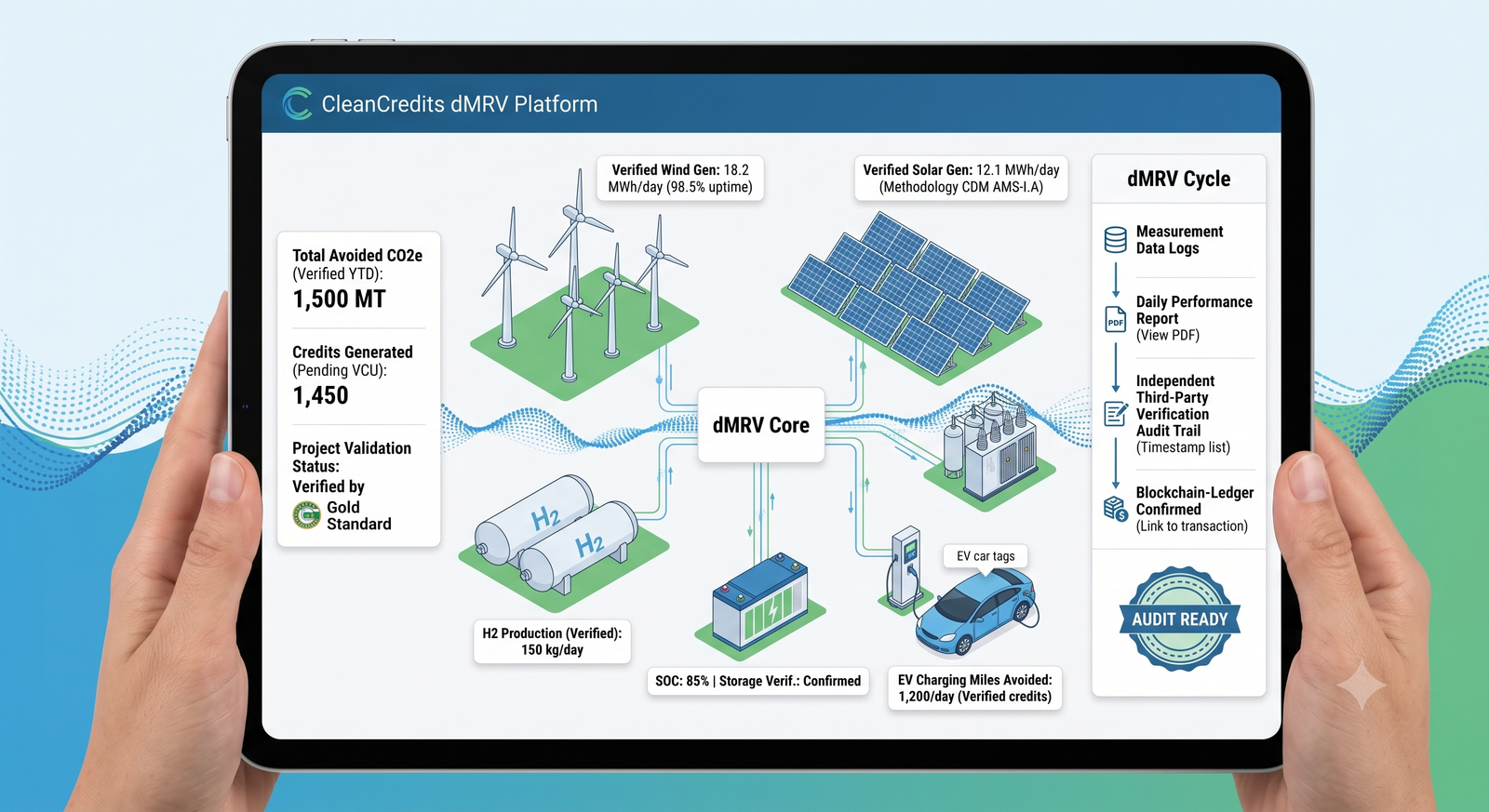
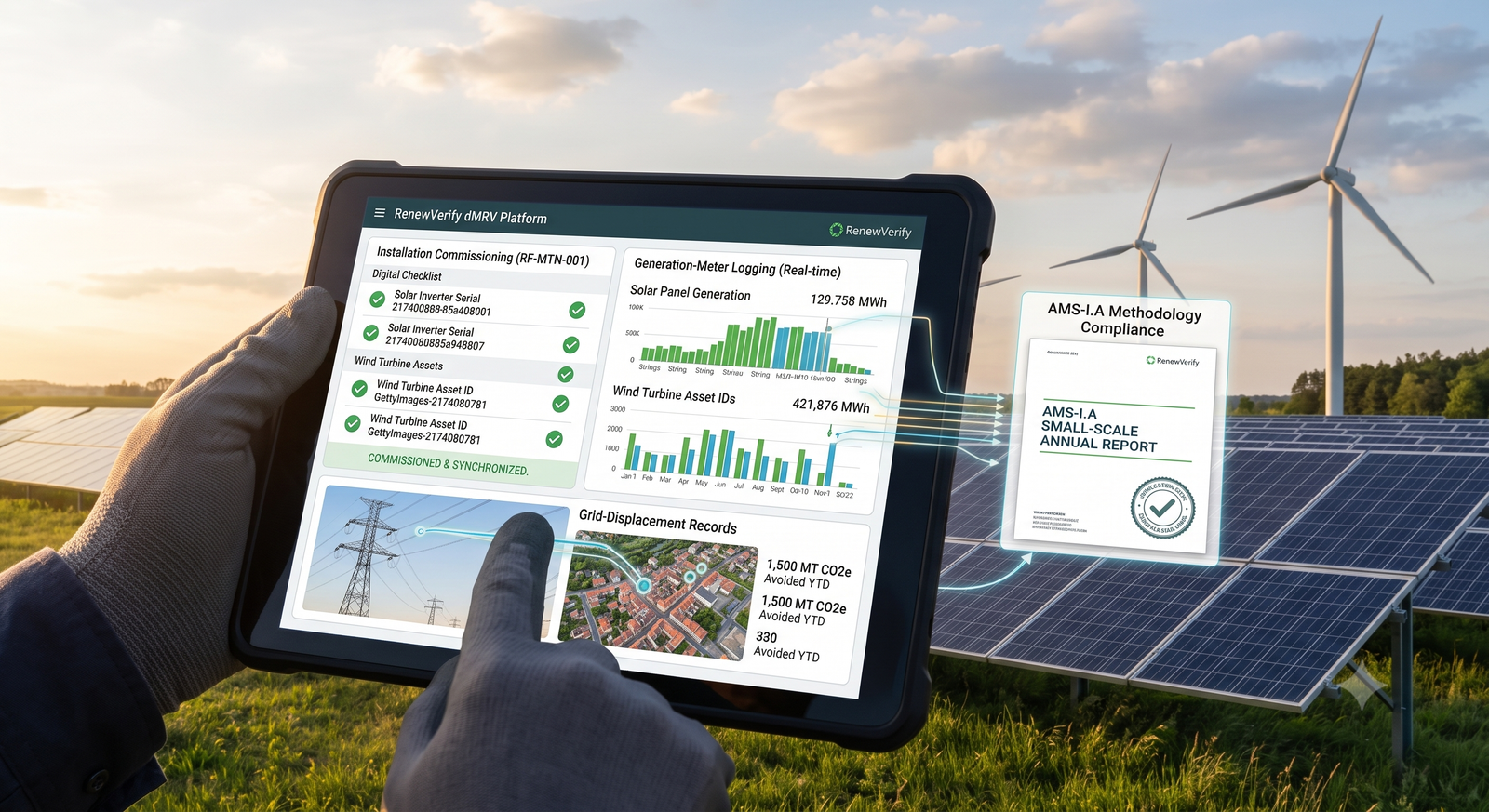
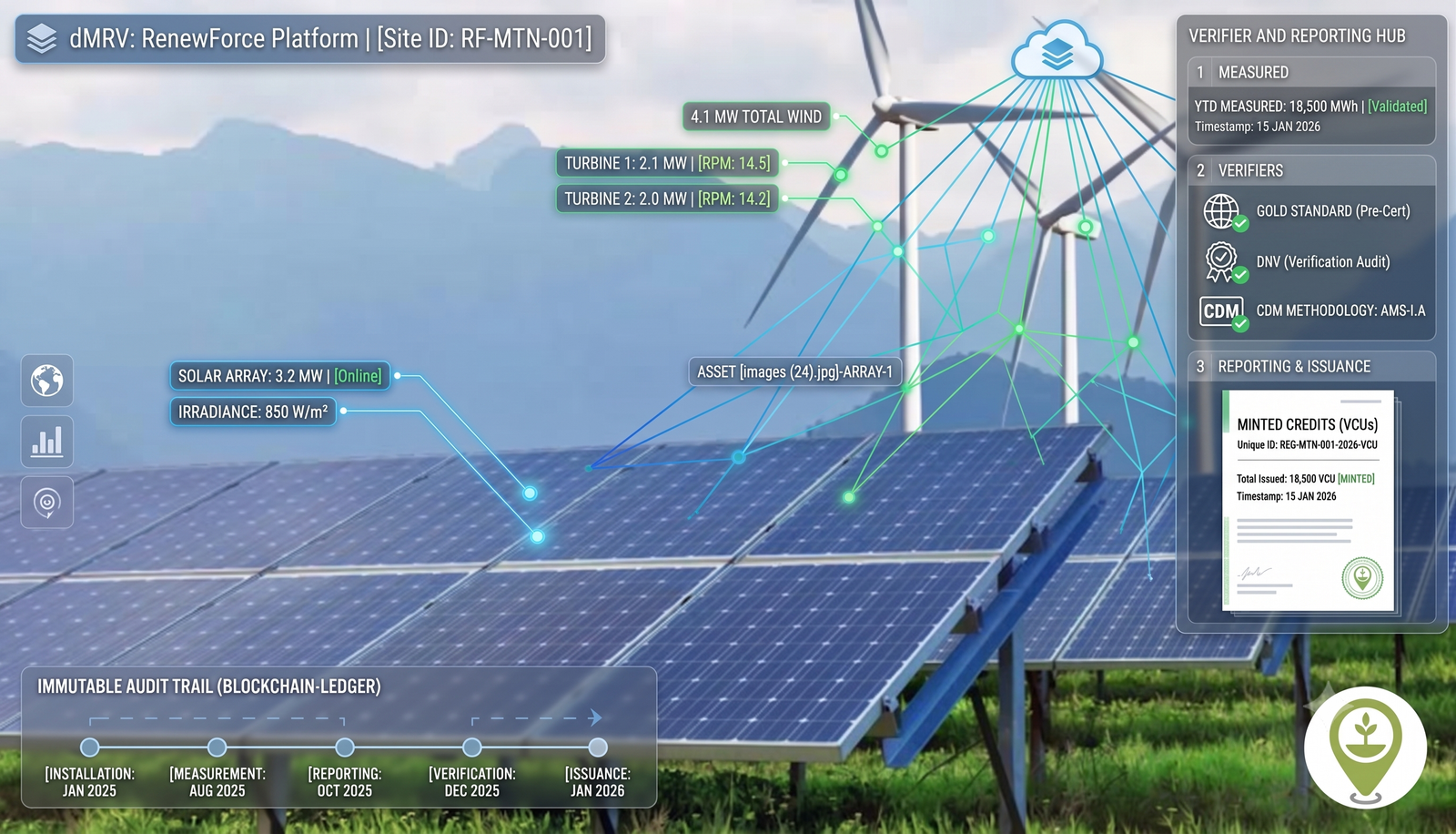
How the credit process flows for renewable energy
01
Register sites and installers
Log every installation site's GPS location, equipment and installer in one register.
02
Capture commissioning evidence
GPS-locked, timestamped photos confirm each installation at the point of commissioning.
03
Log generation readings
Scheduled meter-reading events build a verified generation time series per site.
04
Export for verification
One evidence package ties grid-displacement claims to installation and generation records.
This is the same field-to-credit flow every methodology follows — see it explained in general terms on our impact page.
Why renewable energy credits get delayed or discounted
Almost every delay traces back to one of these four evidence gaps.
Scattered commissioning proof
Commissioning photos and dates are strewn across installer WhatsApp chats, never assembled into a site record.
Inconsistent meter readings
Generation-meter readings are collected ad hoc across a distributed fleet, so no site has a clean, verified series.
Unverifiable displacement
Grid-displacement claims can't be checked without a site-level evidence trail tying generation to a registered install.
No single register
Multi-installer rollouts fragment into disconnected spreadsheets, with no one register of what was installed where.
Renewable Energy carbon credits — FAQs
Key questions about generating and verifying Renewable Energy carbon credits.
Does TrueCarbon support AMS-I.A small-scale renewable energy reporting?
The configurable field schema captures installation commissioning and generation-meter data mapped to AMS-I.A's monitoring requirements for distributed renewable energy sites.
Can TrueCarbon handle a rollout across multiple installers?
Yes. Installers, equipment types and site categories are all configurable, so a multi-installer rollout stays in one register instead of fragmenting.
Guides for other methodologies
Get started
Ready to start earning Renewable Energy credits?
Talk to us about your programme's stage — whether you're mid-registration or just scoping the methodology.