

From field evidence tomeasurable climate impact.
TrueCarbon connects what happens on the ground with the evidence needed to prove it — helping projects turn measurable outcomes into transparent, auditable climate impact.
- GPS Verified
- Evidence Integrity
- Traceable Records
- Standards Aligned
The credit lifecycle, digitised
Four steps, one continuous evidence chain — instead of a paper trail assembled after the fact.
Field event
A field executive logs a plot, pipe, planting or reading — GPS-locked, photo-evidenced, timestamped.
Evidence chain
The record links to its participant, plot and programme automatically — nothing free-floating, nothing re-typed.
Dual approval
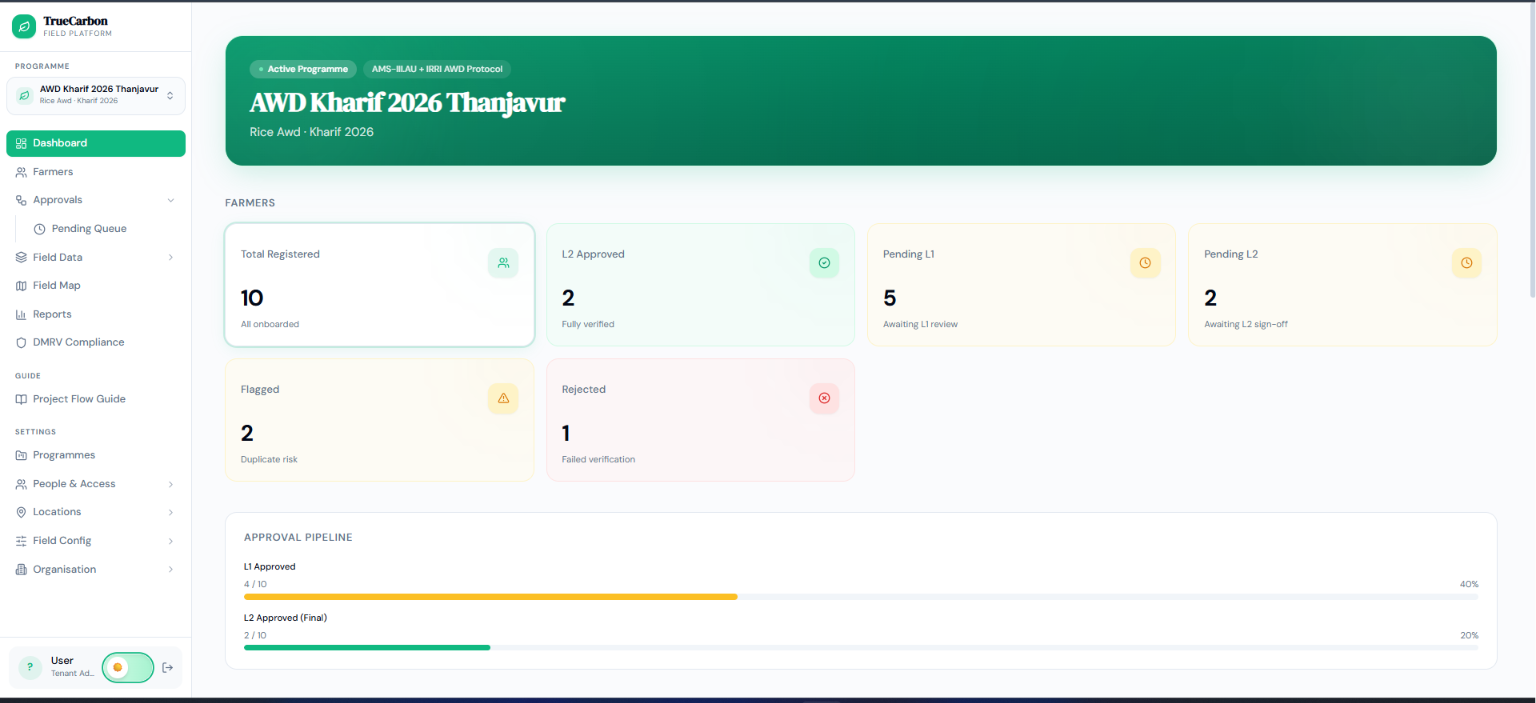
L1 and L2 review every record before it counts. Rejections carry reasons and stay in the audit trail.
Registry-ready credit
Verifiers work from one exportable evidence package, traceable back to the exact field event.
What changes when MRV goes digital
Verification cycle
12–18 months
4–8 weeks
Field data sent back for rework
Common — missing or inconsistent evidence
Rare — validated at point of capture
Repeat site visits to fill evidence gaps
Frequent
Occasional
Evidence traceable to a specific field event
Rarely, beyond spot-checks
Every record, every time
Ranges are illustrative, based on verification cycles commonly reported for AWD rice and ARR programmes on paper-based MRV. Your actual timeline depends on methodology, registry and the state of your existing records — TrueCarbon doesn't set verification timelines, your registry and verifier do.
For a dimension-by-dimension breakdown — including where spreadsheets are still the right call — see the full comparison.
One evidence standard, every methodology
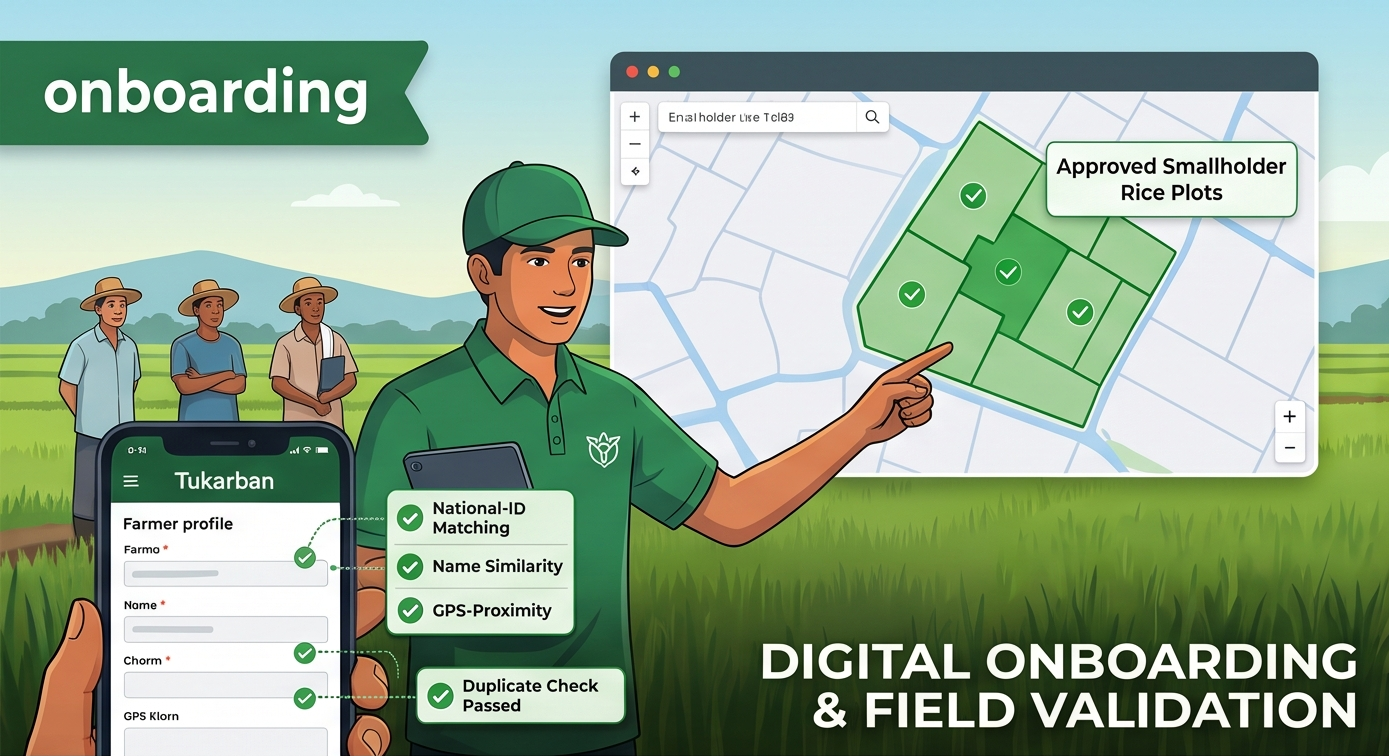
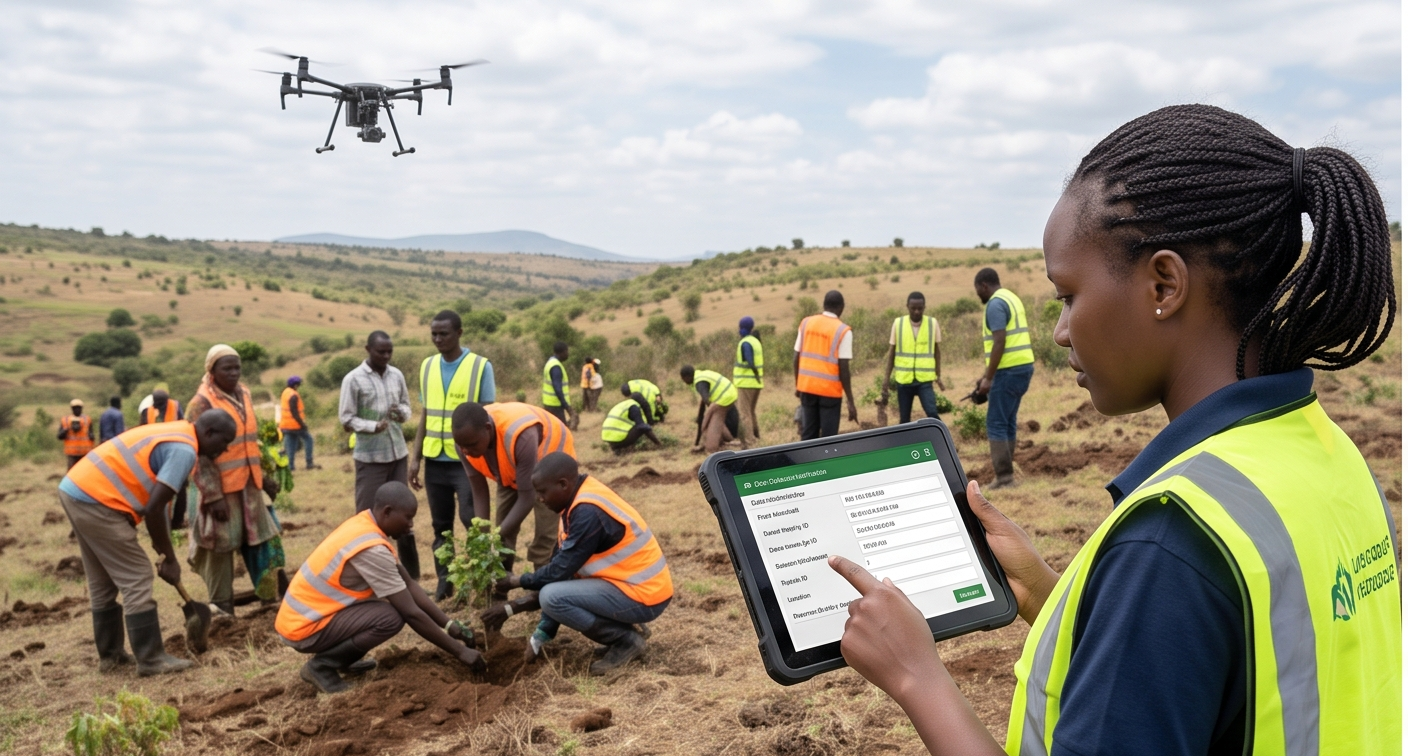
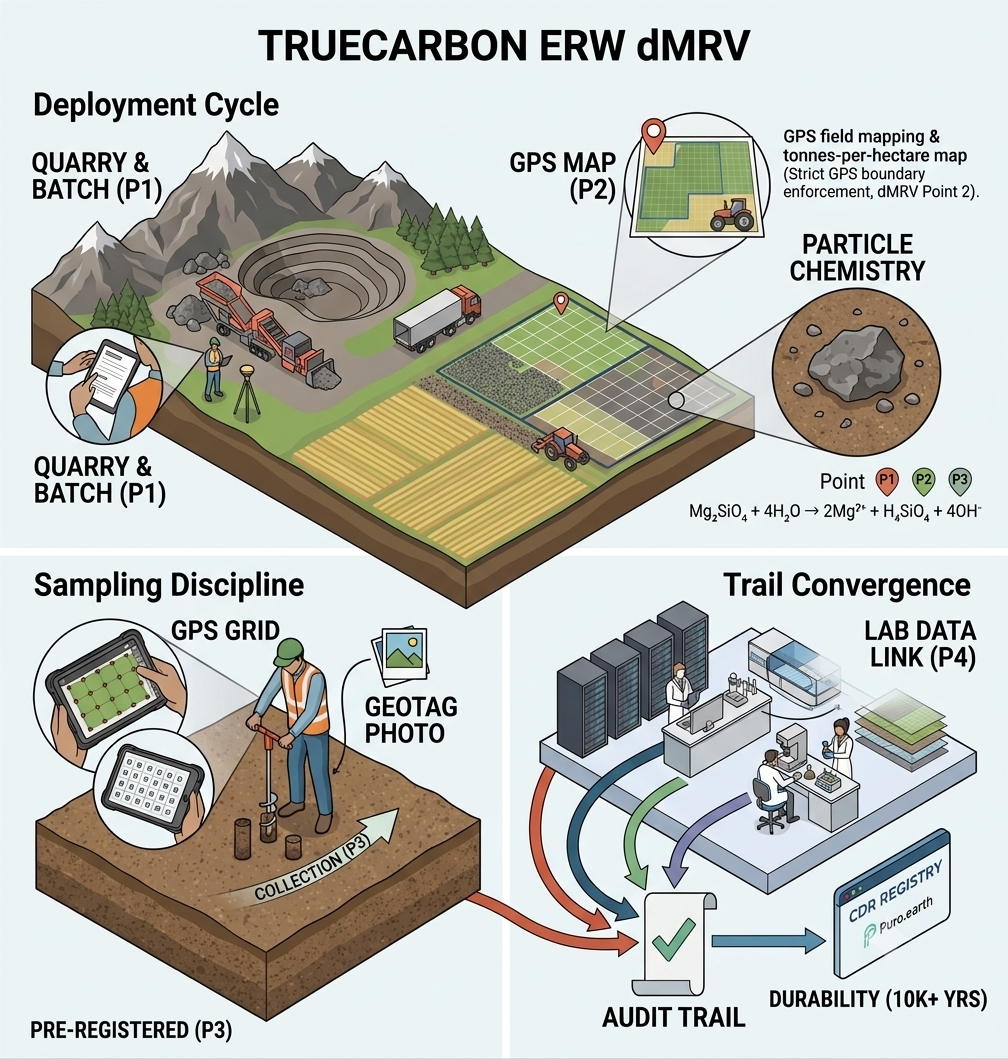
Whether it's a paddy field, a planting site or a quarry, the same rigour applies: GPS-verified, photo-evidenced, dual-approved.
Dig into your specific methodology
Ready to start
See your evidence chain before you commit
We'll walk through what a digitised MRV cycle looks like for your specific methodology and registry.