
How does AWD Rice actually work?
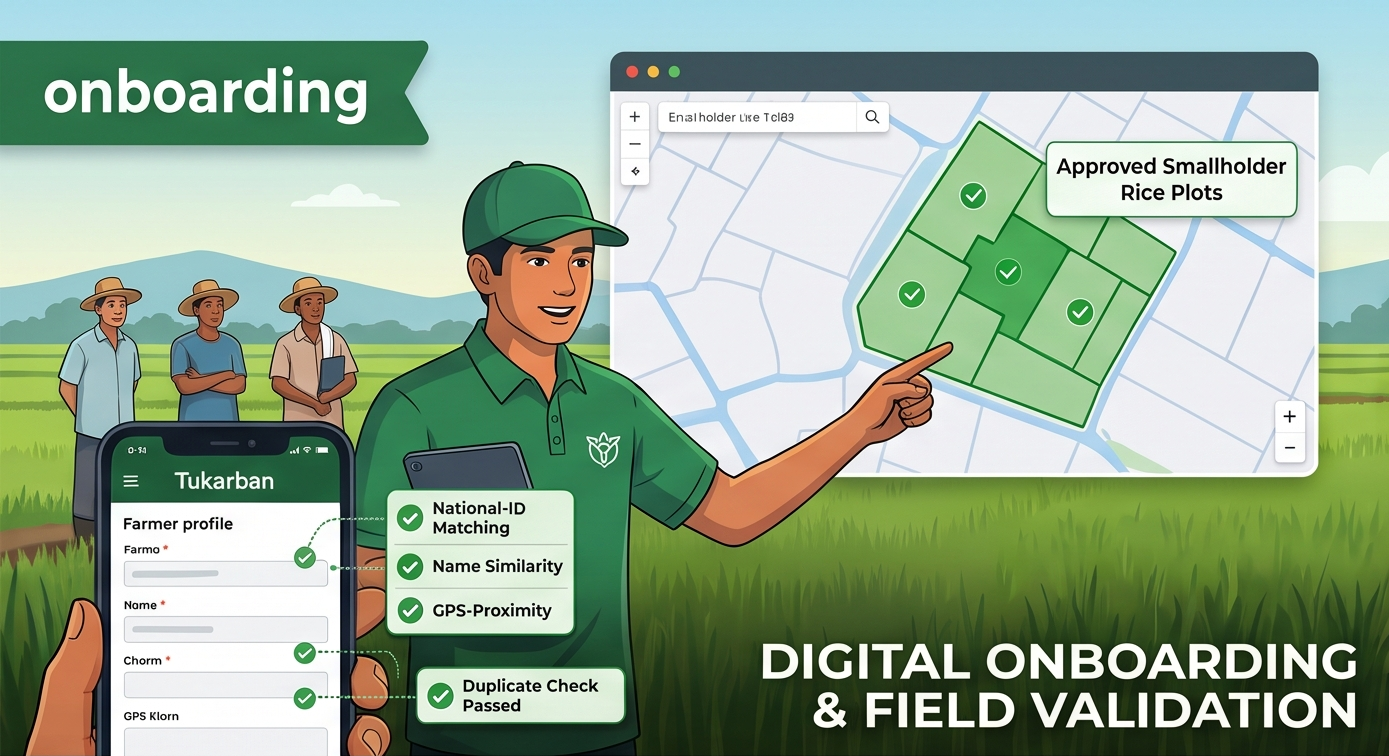
Digitise Alternate Wetting & Drying programmes end-to-end — farmer onboarding, plot boundaries, pipe installation and water-level events — with GPS-verified evidence at every step. Here's the field-to-credit process, and what's different about running it in India versus the global market.
From rice farms to an issued credit
01
Establish the baseline
Conventional continuous-flooding practice and its methane footprint are documented before any AWD intervention begins.
02
Install AWD infrastructure
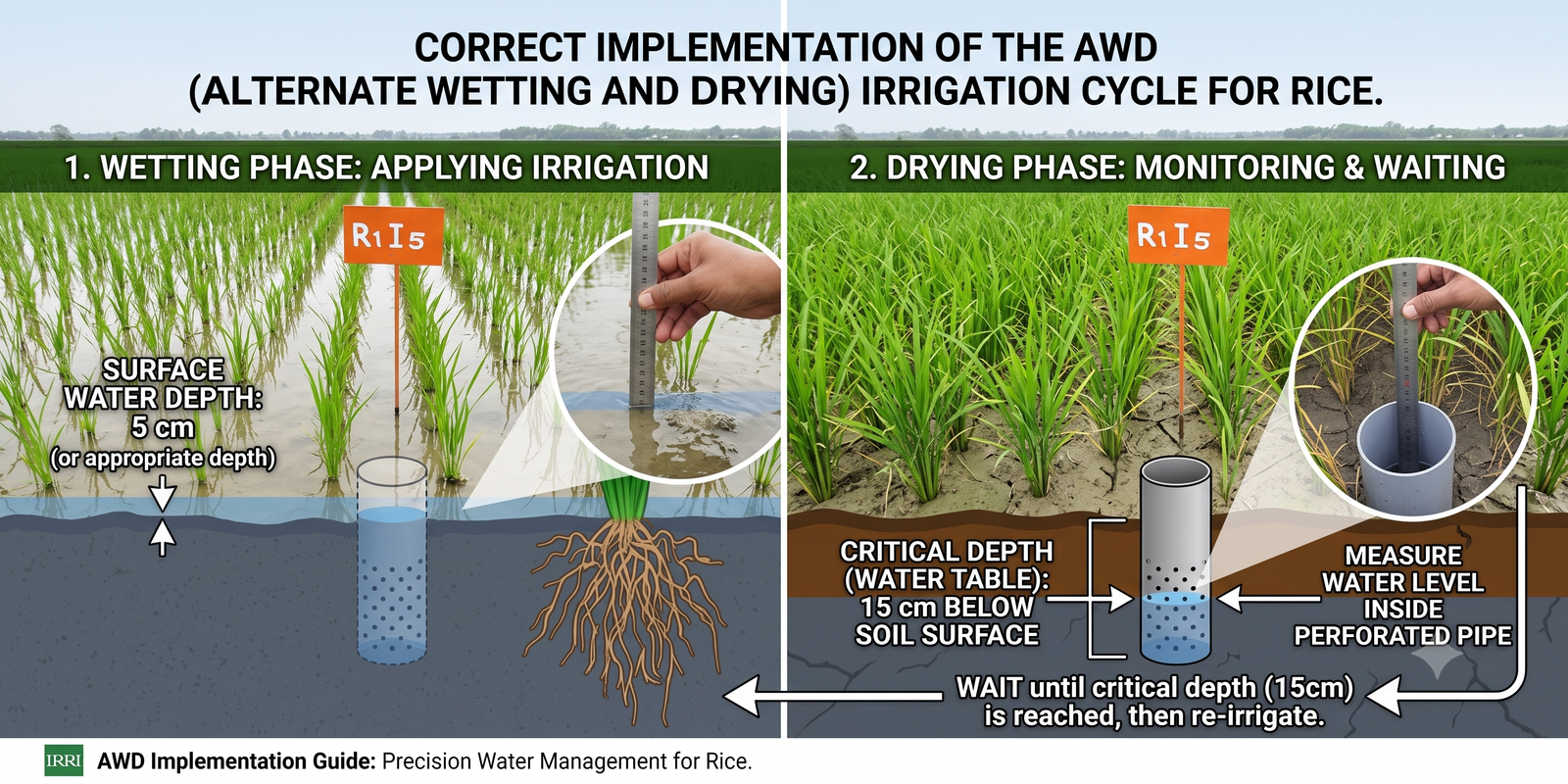
Perforated field-water tubes are installed so water depth can be monitored without guesswork.
03
Manage wetting-and-drying cycles
Fields are allowed to dry to a set depth before re-flooding, cutting the anaerobic conditions that produce methane.
04
Monitor and record water levels
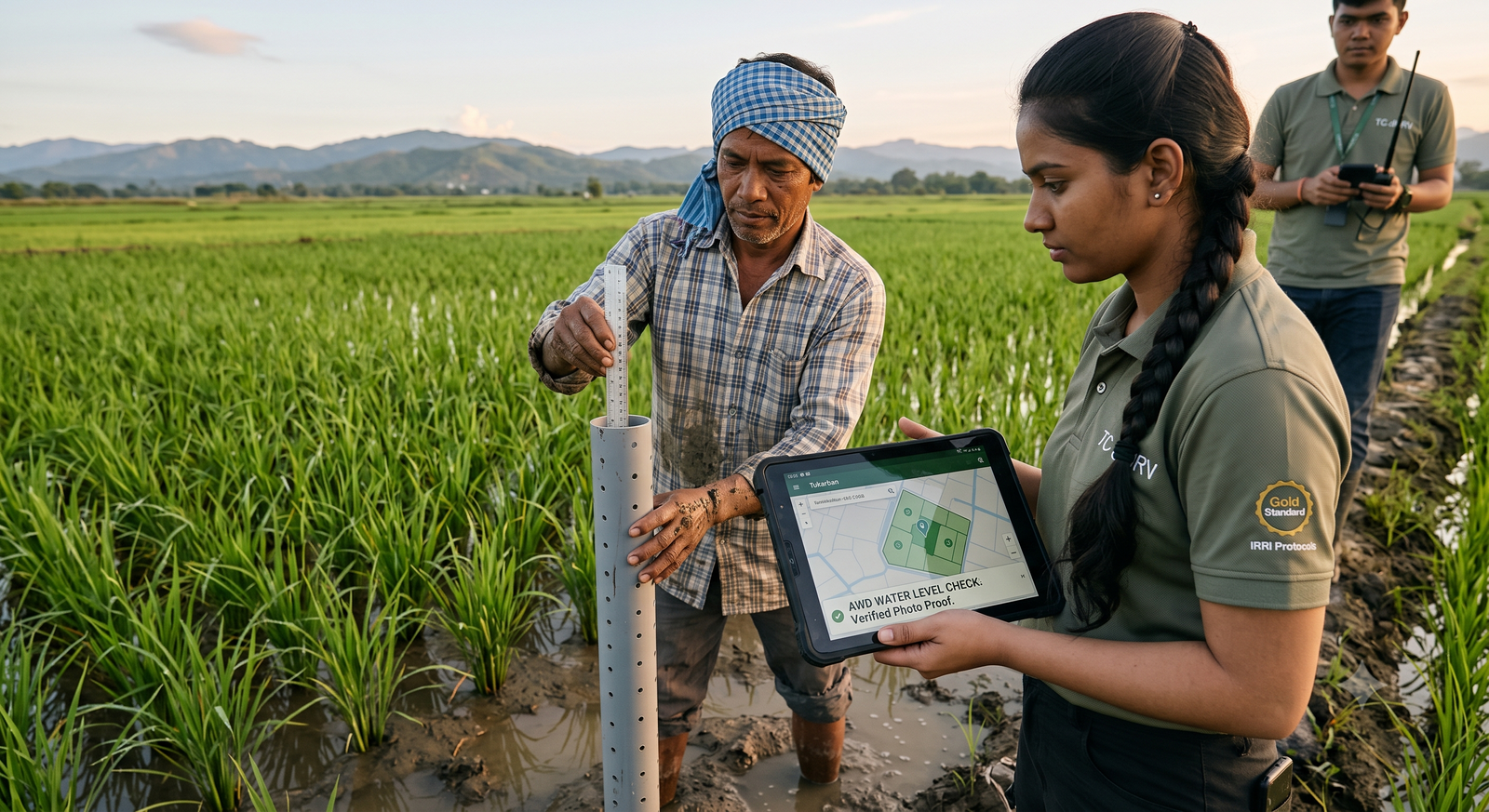
Water-level readings through the season are the core evidence a verifier checks against the claimed cycle count.
05
Calculate emission reductions
Methane avoided is calculated against the flooded baseline using the AMS-III.AU / IRRI protocol.
06
Verify and issue credits
An accredited verifier checks the monitoring evidence before a registry (Gold Standard or Verra) issues credits.
How awd rice works in India
India is the world's largest rice-growing country by area, and paddy cultivation is one of its largest single sources of agricultural methane — which puts AWD at the centre of the country's climate-smart agriculture push.
AWD adoption is promoted through state agriculture departments (notably Punjab and Haryana) and research bodies like ICAR, often alongside water-saving objectives rather than carbon alone.
Smallholder-dominated rice farming means most AWD carbon projects aggregate farmers through FPOs (Farmer Producer Organisations) rather than working with a small number of large estates.
AWD's water-saving co-benefit is often the entry point for farmer adoption in water-stressed states, with the methane reduction layered on top as the carbon-credit case.
India's rice-residue burning problem in the north makes combining AWD with straw/stubble management especially relevant locally.
How awd rice works in the global market
AWD is one of the most established methane-reduction methodologies in the voluntary carbon market, developed with IRRI and adopted across major rice-growing regions of South and Southeast Asia.
The methodology is codified for use under both Gold Standard and Verra (building on the AMS-III.AU approach), giving projects a choice of registry.
Beyond India, active AWD carbon programmes exist in Vietnam, the Philippines, Bangladesh and other IRRI partner countries.
Buyers are increasingly food and beverage companies and rice-supply-chain corporates seeking Scope 3 reductions, not just generic offset buyers.
Because AWD is a practice change rather than new infrastructure, monitoring quality — not the underlying technology — usually decides verifier confidence.
AWD Rice — frequently asked questions
How AWD Rice dMRV works with TrueCarbon, from data capture to verification.
Which methodologies does TrueCarbon support for AWD rice?
TrueCarbon's AWD module is built around AMS-III.AU and IRRI field protocols, and the configurable field schema lets you adapt data collection to Gold Standard or Verra requirements without code changes.
How does TrueCarbon prevent fake water-level readings?
Photos must be captured inside the mobile app with GPS lock (accuracy under 20 metres) before the camera opens. EXIF GPS data is validated server-side and photos older than 24 hours are rejected.
Can field teams work offline in remote paddy areas?
Yes. The TrueCarbon mobile app is offline-first — field executives collect data without connectivity and sync when back in coverage.
How other programmes work
Ready to start
Running a AWD Rice programme?
Talk to us about your programme's stage — whether you're mid-registration or just scoping the methodology.