
How does Biochar actually work?
Track biochar from feedstock sourcing through pyrolysis batches to field application, with the unbroken chain of custody that carbon-removal buyers demand. Here's the field-to-credit process, and what's different about running it in India versus the global market.
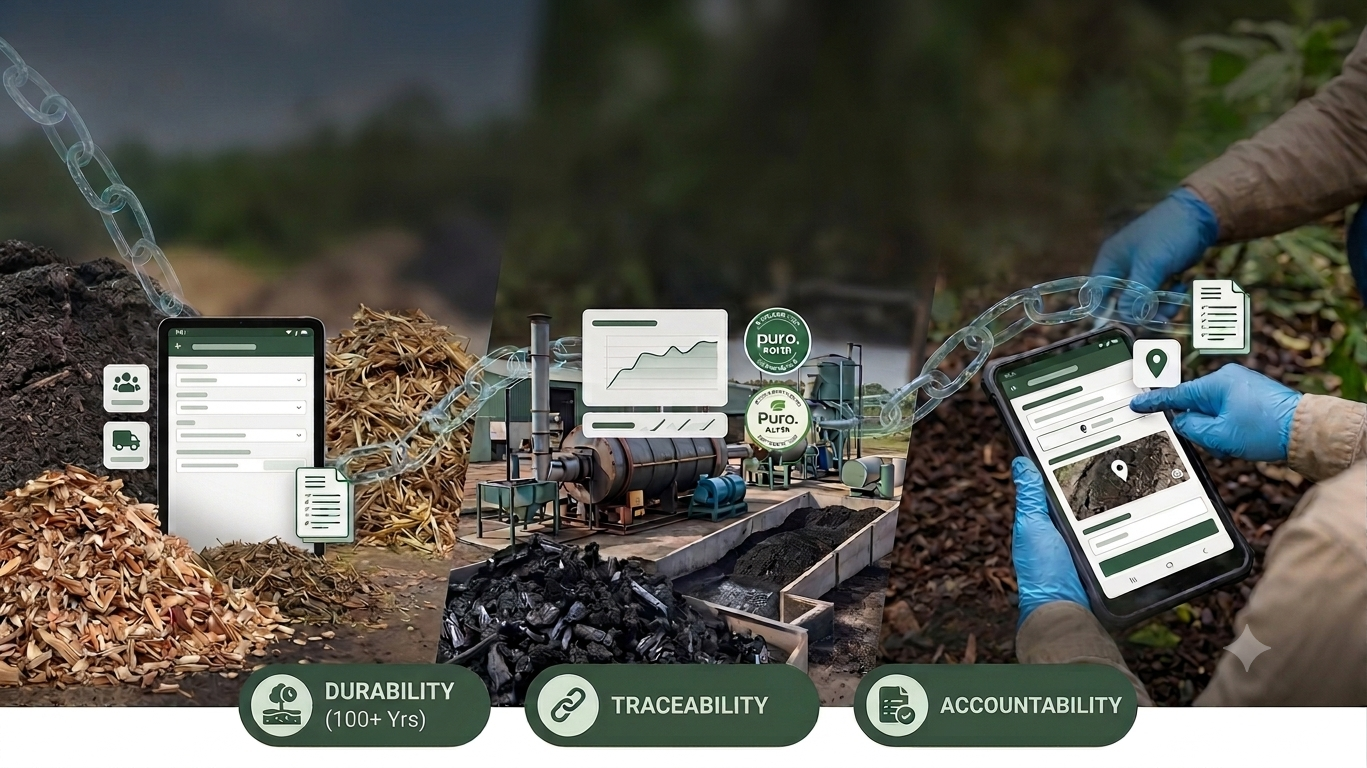
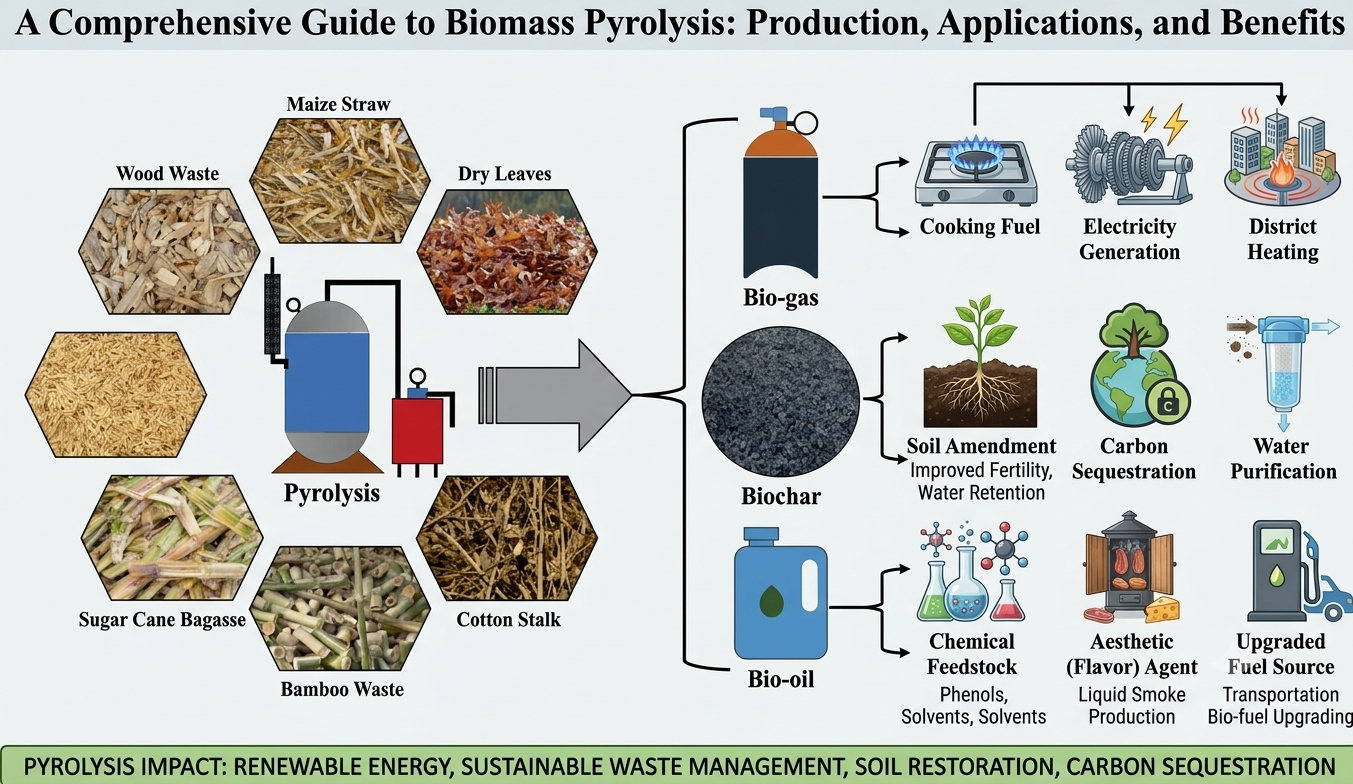
From biochar production facilities to an issued credit
01
Source feedstock
Agricultural residue or forestry waste is collected and logged by type, source and quantity.
02
Run pyrolysis
Feedstock is converted to biochar in a kiln or reactor under controlled, low-oxygen heating.
03
Test biochar quality
Carbon content and stability (e.g. H:Corg ratio) are lab-tested to confirm the material qualifies as a durable carbon store.
04
Apply biochar
Biochar is applied to soil, or another durable end use, with location and quantity recorded.
05
Document the chain of custody
Feedstock in, biochar out, and application data are linked end to end — the standard Puro.earth and similar registries expect.
06
Verify and issue credits
An accredited verifier checks the production and application evidence before CORCs or equivalent credits are issued.
How biochar works in India
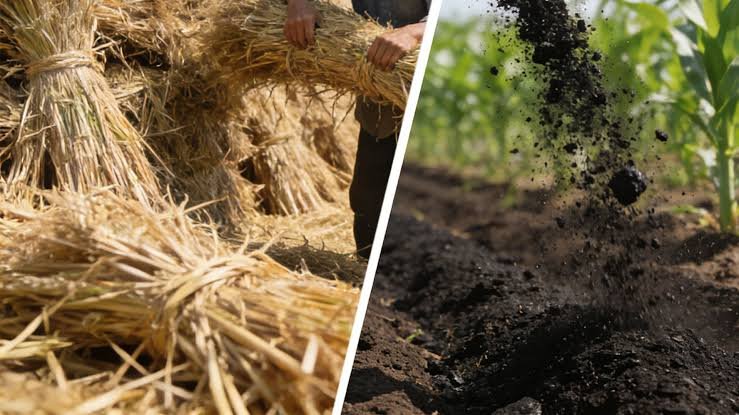
India produces enormous volumes of crop residue that are often burned rather than used, which is exactly the feedstock problem biochar is positioned to solve.
Stubble burning in Punjab, Haryana and western UP is a major seasonal air-quality crisis, and biochar is increasingly discussed as an alternative use for that same residue.
Several Indian pyrolysis pilots and startups are emerging around this residue-to-biochar pathway, often positioned as a dual air-quality-and-carbon solution rather than carbon alone.
Crop Residue Management (CRM) scheme support in some states creates policy tailwinds for residue-diversion projects, even where the scheme itself isn't carbon-specific.
India's scale of dispersed, smallholder residue supply makes feedstock logistics and chain-of-custody evidence the practical bottleneck more often than the pyrolysis technology itself.
How biochar works in the global market
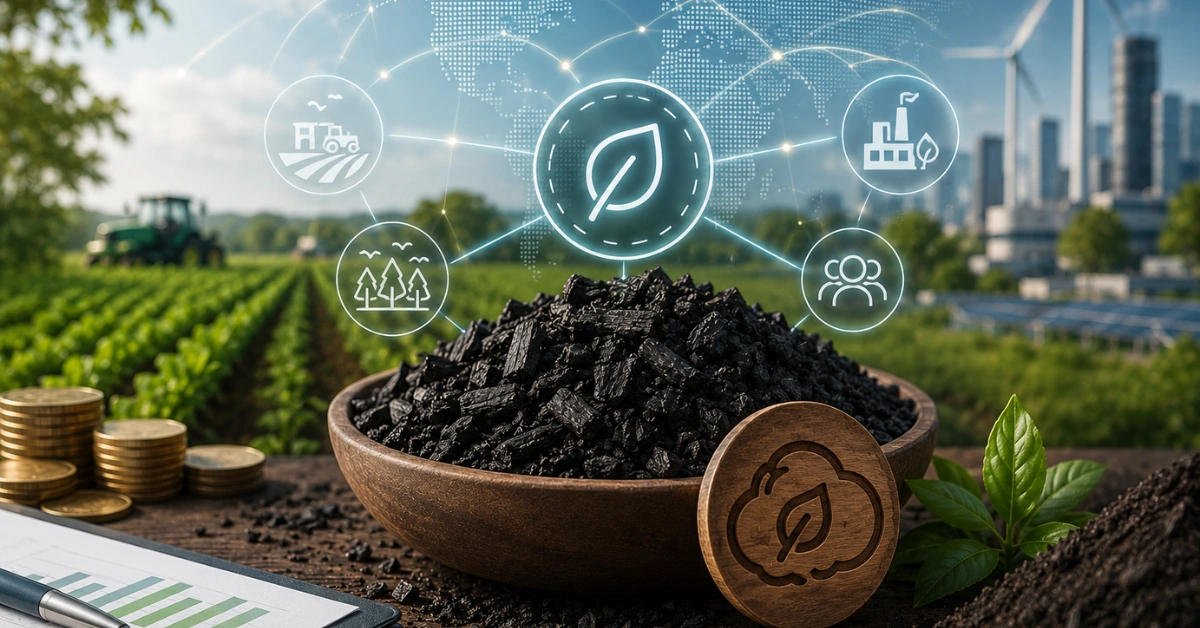
Biochar carbon removal is one of the fastest-growing durable CDR (carbon dioxide removal) categories globally, verified mainly through Puro.earth and increasingly Verra's VM0044.
Durable-removal buyers, including large technology companies buying multi-year offtakes, have made biochar one of the higher-priced, higher-scrutiny credit types rather than a commodity offset.
Europe and North America currently host the largest verified biochar production volumes, with South Asia and Africa growing fast on residue availability.
Because biochar is a physical, storable product, chain-of-custody from feedstock to field application is the single most-checked evidence category across registries.
Application end-use (soil, construction material, etc.) affects both the permanence claim and the methodology used, so registries increasingly require explicit end-use tracking.
Biochar — frequently asked questions
How Biochar dMRV works with TrueCarbon, from data capture to verification.
Does TrueCarbon support Puro.earth biochar methodology requirements?
TrueCarbon's configurable schema captures the production, feedstock and application data points required by Puro.earth and VM0044, and exports them in verifier-ready formats.
Can we track multiple production sites in one programme?
Yes. Multi-site programmes are native — each kiln or production unit is registered separately with its own batch history.
How other programmes work
Ready to start
Running a Biochar programme?
Talk to us about your programme's stage — whether you're mid-registration or just scoping the methodology.