
How does ARR actually work?
Run ARR programmes with geotagged planting records, monitoring plots, survival-rate tracking and biomass sampling — ready for satellite cross-checks and verifier scrutiny. Here's the field-to-credit process, and what's different about running it in India versus the global market.
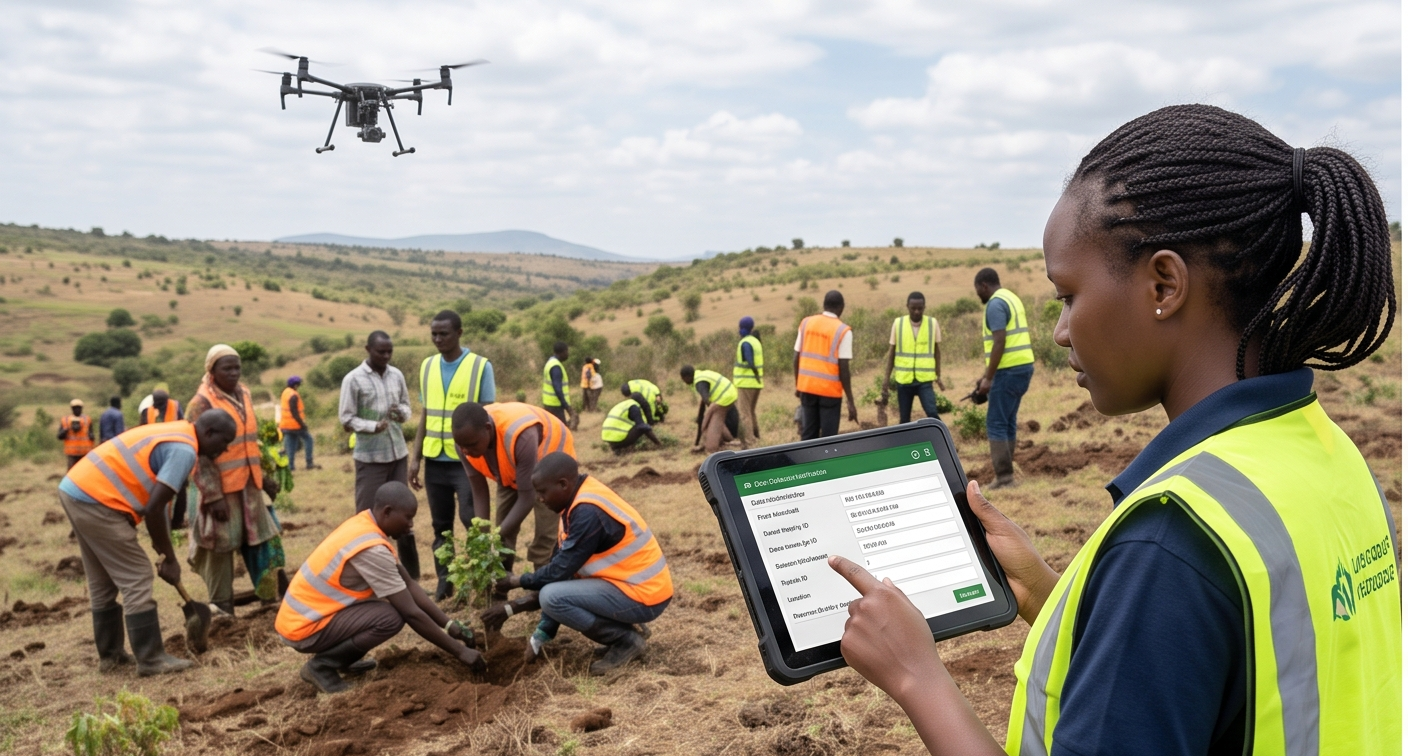
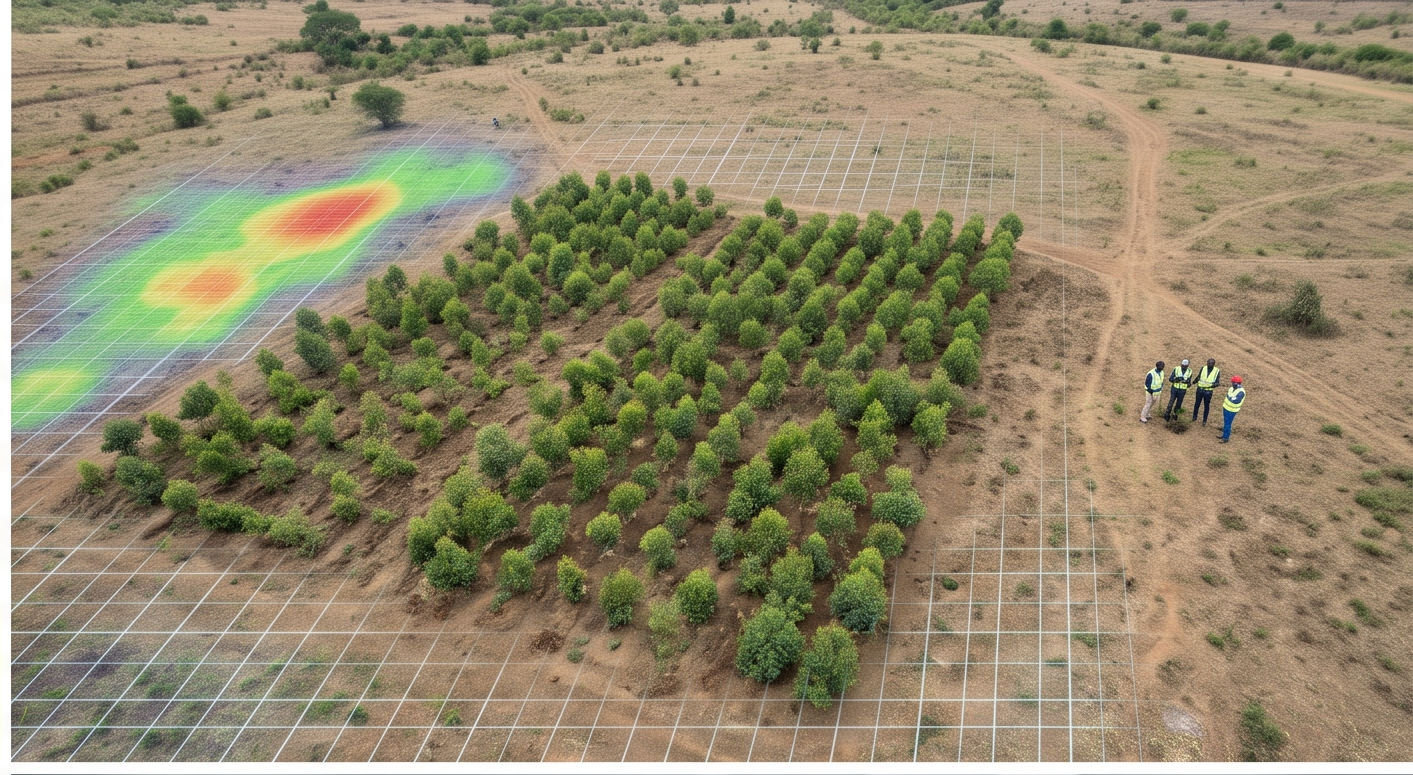
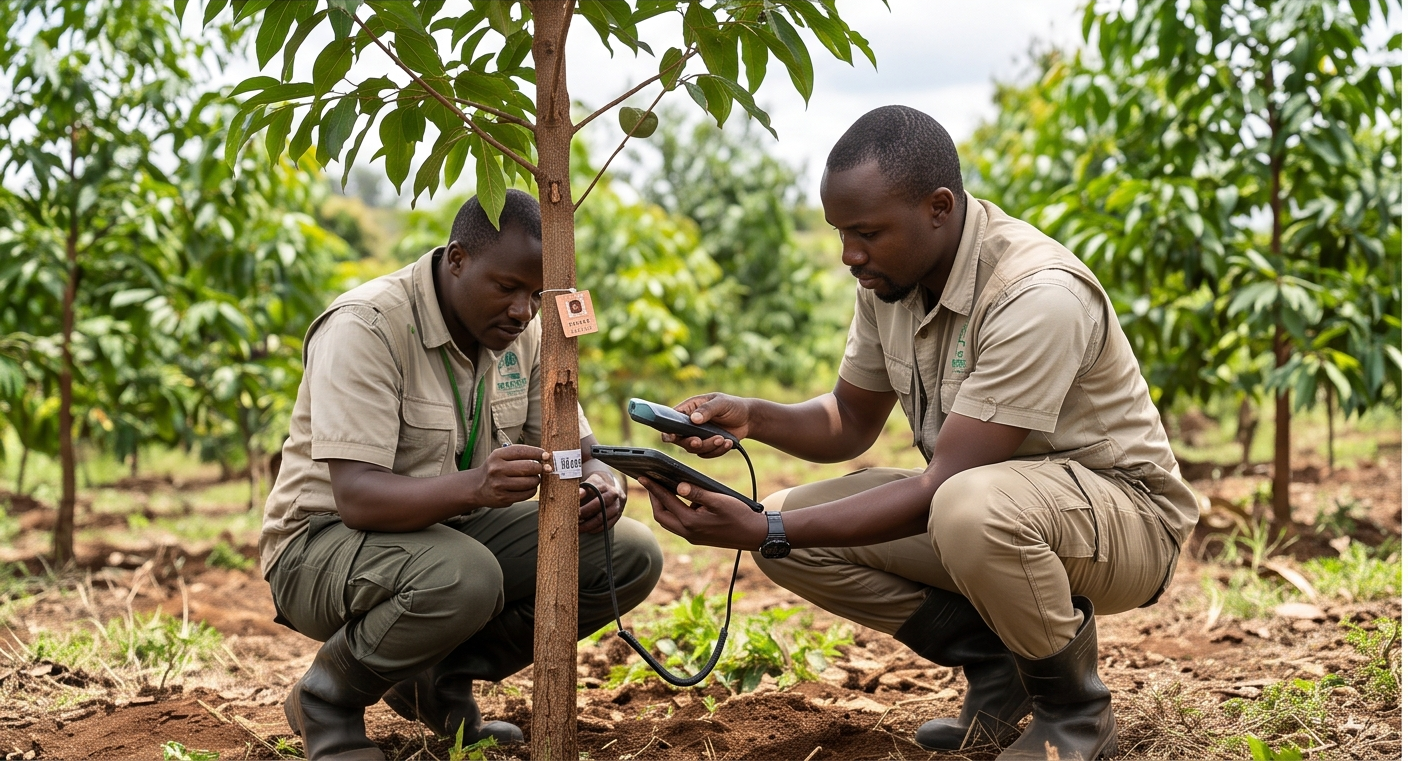
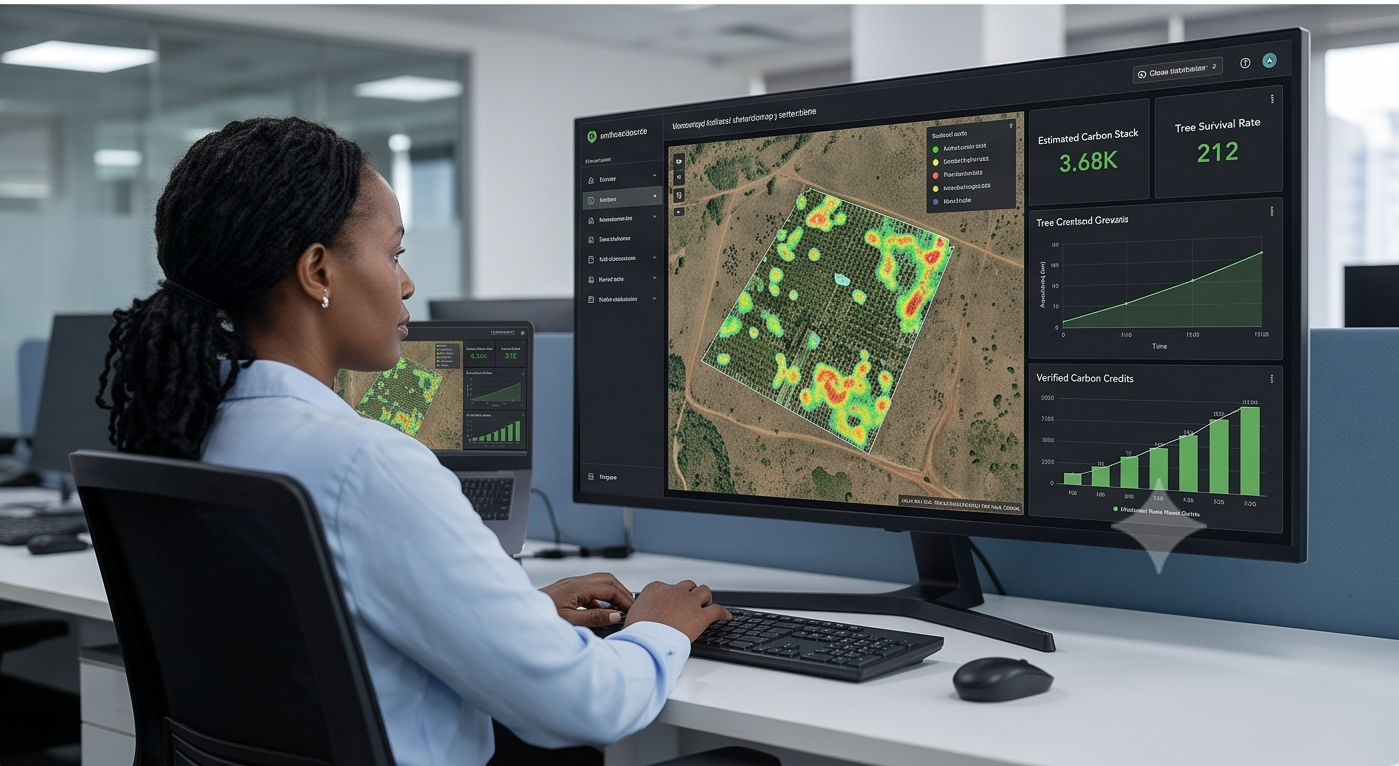
From forestry projects to an issued credit
01
Confirm land eligibility
The site's land-use history is checked against the methodology's non-forest baseline definition before planting is registered.
02
Design the planting plan
Species mix, spacing and density are chosen for the site's soil, climate and the carbon model being used.
03
Plant and register monitoring plots
Permanent GPS-referenced monitoring plots are set out alongside the planting so future measurement always returns to the same ground.
04
Track survival and growth
Scheduled re-measurement of the monitoring plots builds the survival-rate and biomass time series the carbon calculation depends on.
05
Model carbon stock
Growth data feeds an allometric or remote-sensing-calibrated model to estimate sequestered carbon over time.
06
Verify and issue credits
A third-party verifier reviews the boundary, planting and monitoring evidence before credits are issued.
How arr works in India
Most large-scale afforestation in India runs through government programmes rather than the voluntary carbon market, which shapes where private ARR carbon projects can realistically operate.
Programmes like the Green India Mission and CAMPA-funded afforestation are government-led, not carbon-credit-financed, so private ARR projects tend to focus on degraded private, community or wasteland rather than reserved forest.
India's land classification system (forest land, revenue land, common land) makes establishing a clean non-forest baseline a bigger diligence item here than in countries with simpler land registries.
Agroforestry-style ARR — trees integrated into farmland — is often a more practical starting point in India than large monoculture plantations, given smallholder land-holding patterns.
Community and common-land afforestation carries strong co-benefit potential (fodder, fuelwood, livelihoods) that can matter as much to local buy-in as the carbon case.
How arr works in the global market
ARR is one of the most established categories in the voluntary carbon market, standardised under methodologies like Verra's VM0047 and CDM's AR-ACM0003.
Latin America, Sub-Saharan Africa and Southeast Asia host the largest volume of registered ARR projects, often at landscape rather than single-farm scale.
Remote-sensing cross-checks (satellite NDVI/EVI) are increasingly expected alongside ground monitoring plots as registries tighten scrutiny on survival claims.
Buyers frequently value ARR credits for biodiversity and community co-benefits as much as the tonne of carbon, which shapes how projects are marketed.
Permanence risk (fire, land-use reversal) is the most common point of registry and buyer diligence for ARR projects worldwide.
ARR — frequently asked questions
How ARR dMRV works with TrueCarbon, from data capture to verification.
Does TrueCarbon support VM0047 for ARR projects?
Yes. The configurable field schema maps to VM0047 census-based and area-based approaches, and monitoring plot data exports support biomass estimation workflows.
Can TrueCarbon handle community plantations across many small parcels?
Yes. Each parcel gets its own GPS boundary with overlap detection, and participants can hold multiple plots under one registration.
More on this methodology
How other programmes work
Ready to start
Running a ARR programme?
Talk to us about your programme's stage — whether you're mid-registration or just scoping the methodology.