
How does Soil Carbon actually work?
Run soil organic carbon programmes with field-level practice-change logging, permanent soil sampling points and lab-data linkage — built for VM0042's model-plus-measurement approach. Here's the field-to-credit process, and what's different about running it in India versus the global market.
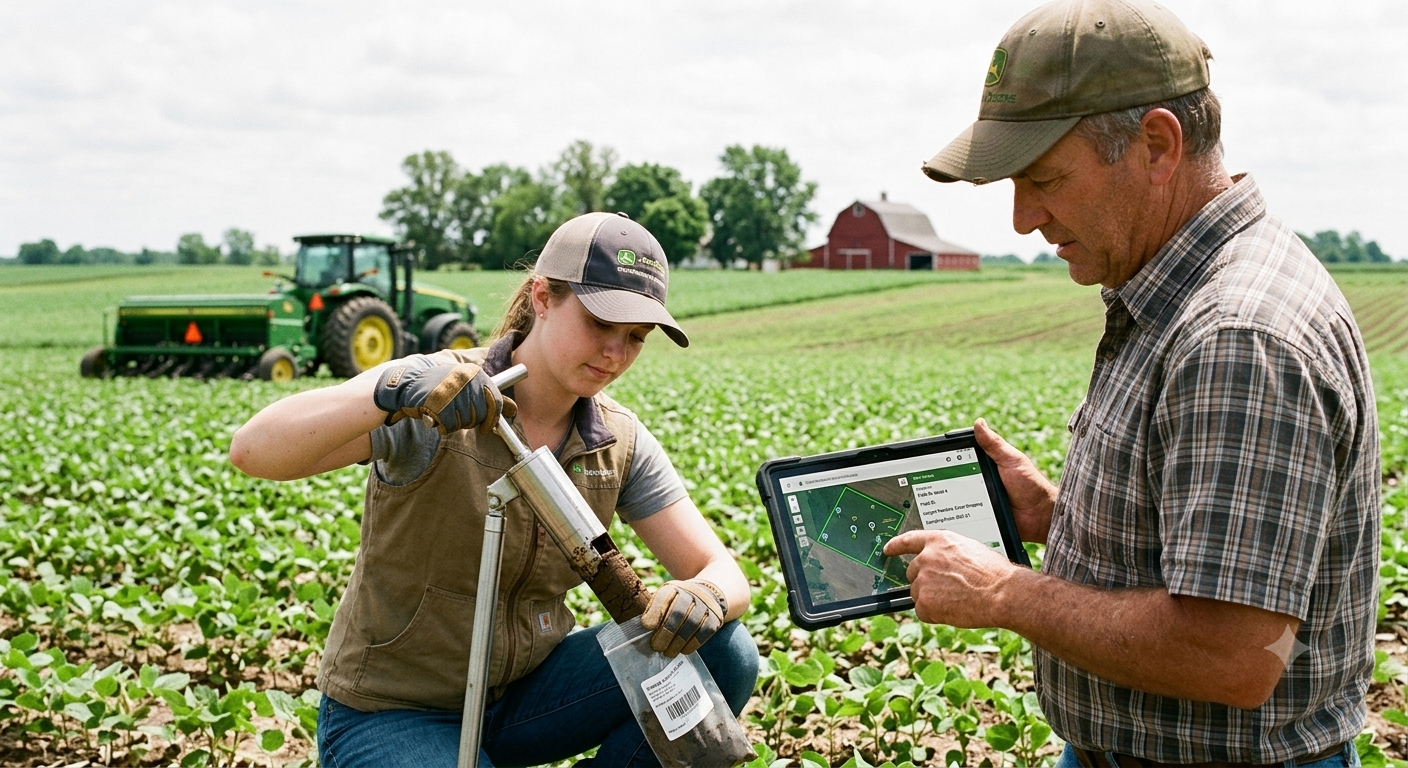
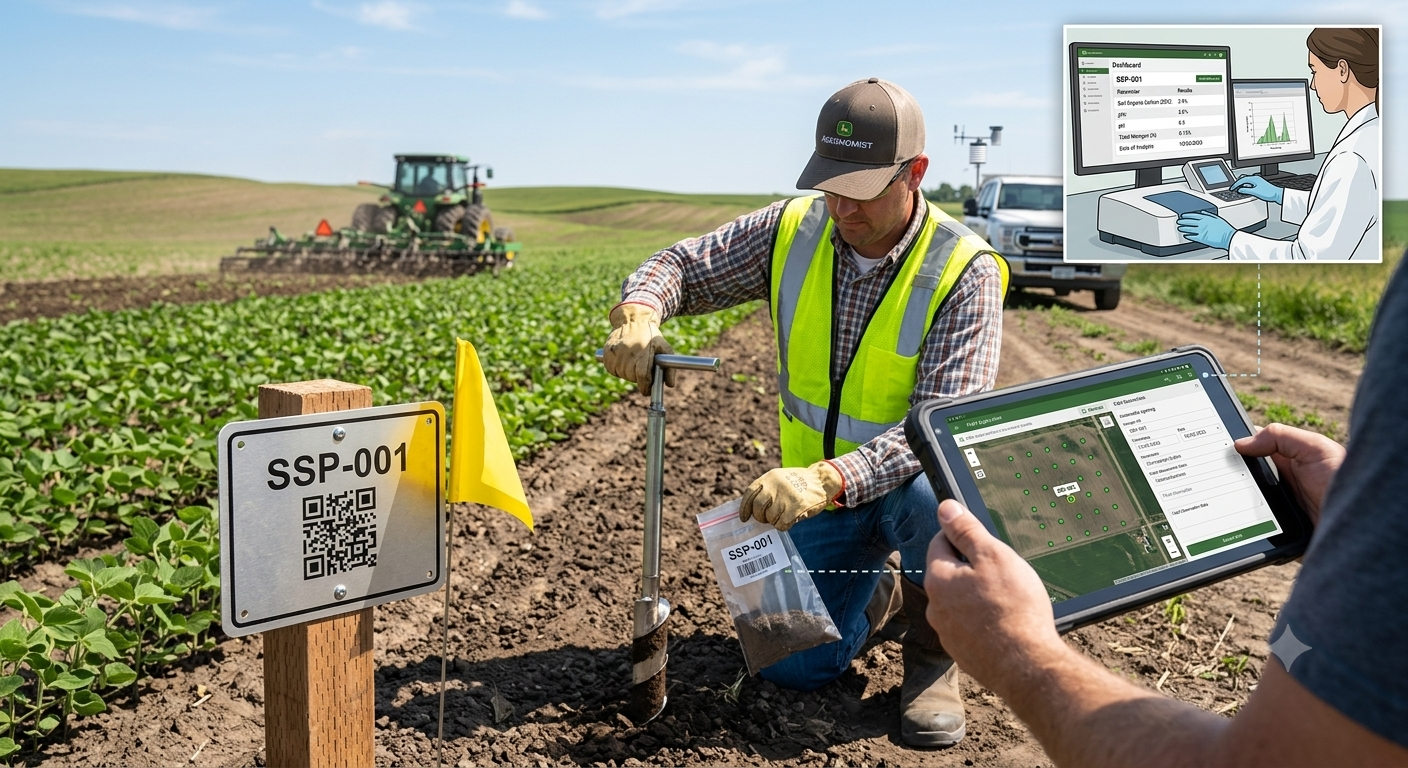
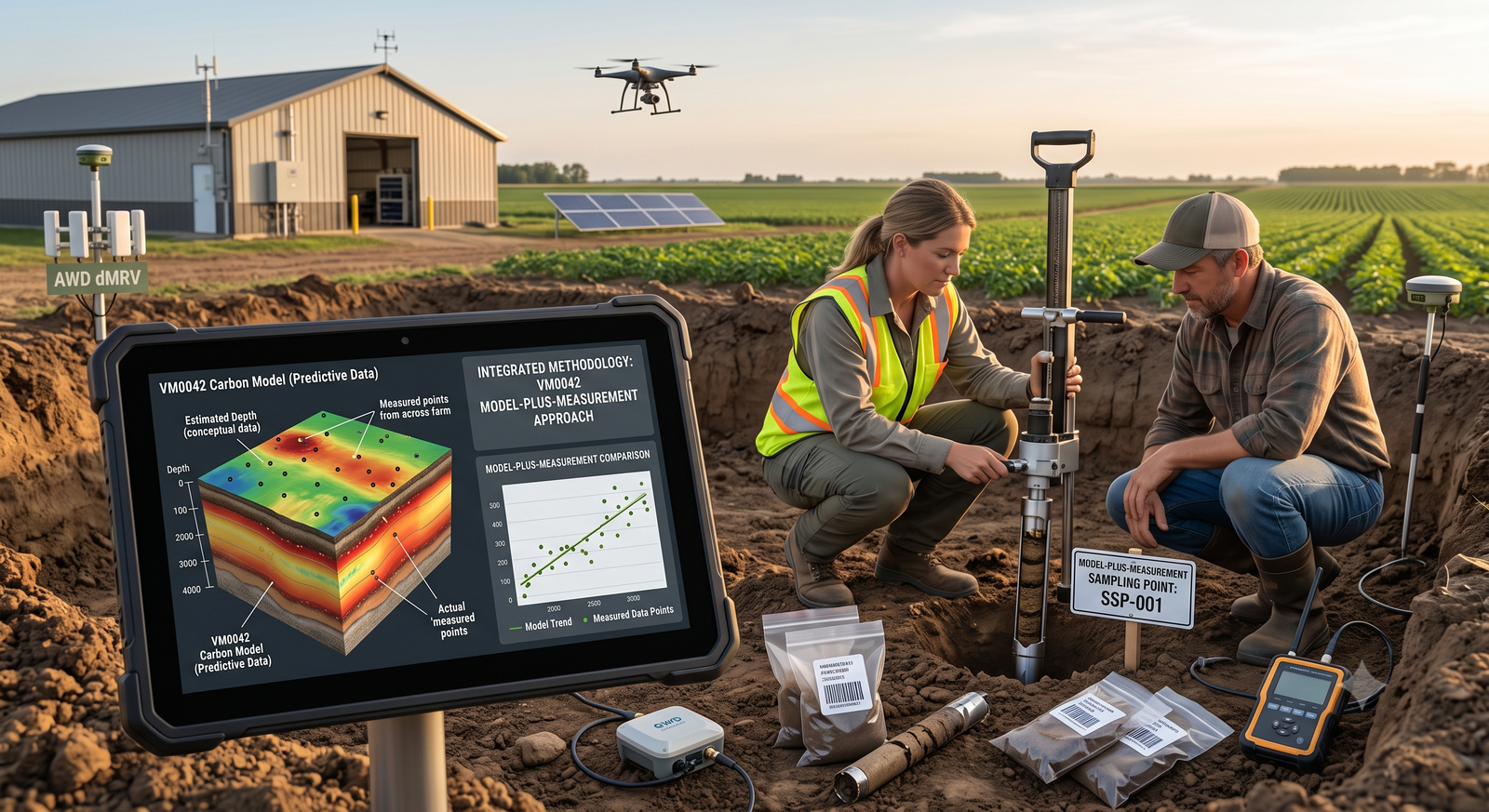
From regenerative farms to an issued credit
01
Enrol farms and set the baseline
Fields are registered with an initial soil sample establishing the starting carbon stock.
02
Adopt regenerative practices
Farmers shift practices — reduced tillage, cover cropping, residue retention — that build soil carbon over time.
03
Log practice changes
Each practice change is recorded per field, in-season, rather than reconstructed later from memory.
04
Resample the same ground
GPS-permanent sampling points are re-measured on a schedule to track carbon change at the exact same location.
05
Model and validate
Lab results calibrate a process-based model — VM0042's model-plus-measurement approach — to estimate carbon change across the whole enrolled area.
06
Verify and issue credits
A verifier reviews enrolment, practice-change and sampling evidence before credits are issued.
How soil carbon works in India
Soil carbon programmes in India are emerging mainly through corporate agricultural supply chains rather than as standalone carbon projects.
Textile and FMCG companies sourcing cotton, sugarcane or other staple crops are among the earliest funders of regenerative-agriculture transitions in India, often for Scope 3 supply-chain reasons as much as tradeable credits.
India's smallholder-dominated farming means aggregation through FPOs is close to essential for reaching meaningful enrolled area.
Diverse agro-climatic zones mean a practice proven to build soil carbon in one region, such as Punjab, may need real recalibration for another, such as the Deccan plateau.
Government soil-health initiatives create general awareness of soil testing, but standalone carbon-market soil projects in India remain early-stage relative to more developed markets.
How soil carbon works in the global market
Soil carbon is one of the fastest-growing but most scientifically debated categories in the voluntary carbon market, standardised mainly under Verra's VM0042.
North America and Australia currently have the most developed soil-carbon carbon-credit markets, with growing activity in Global South supply chains.
Measurement uncertainty and permanence — soil carbon can be lost by reverting practices — are the two most common points of buyer and registry scrutiny.
Because VM0042 combines direct measurement with modelling, the quality of both the sampling programme and the underlying model matter equally to credit integrity.
Corporate supply-chain-linked funding, rather than pure voluntary-offset buyers, is an increasingly common financing model for soil carbon projects globally.
Soil Carbon — frequently asked questions
How Soil Carbon dMRV works with TrueCarbon, from data capture to verification.
Does TrueCarbon support VM0042's model-plus-measurement approach?
The platform captures the practice-change and soil-sampling evidence VM0042 requires to calibrate and validate a soil carbon model, with lab data linked to permanent GPS sampling points.
Can TrueCarbon flag farms already enrolled in another programme?
Yes. Duplicate detection on national ID, name similarity and GPS proximity flags likely overlaps with other regenerative-agriculture programmes at enrolment.
How other programmes work
Ready to start
Running a Soil Carbon programme?
Talk to us about your programme's stage — whether you're mid-registration or just scoping the methodology.