
How to get carbon credits for Blue Carbon
A practical walkthrough of what it takes to earn verified carbon credits from mangrove restoration sites — and where digital evidence makes or breaks the process.
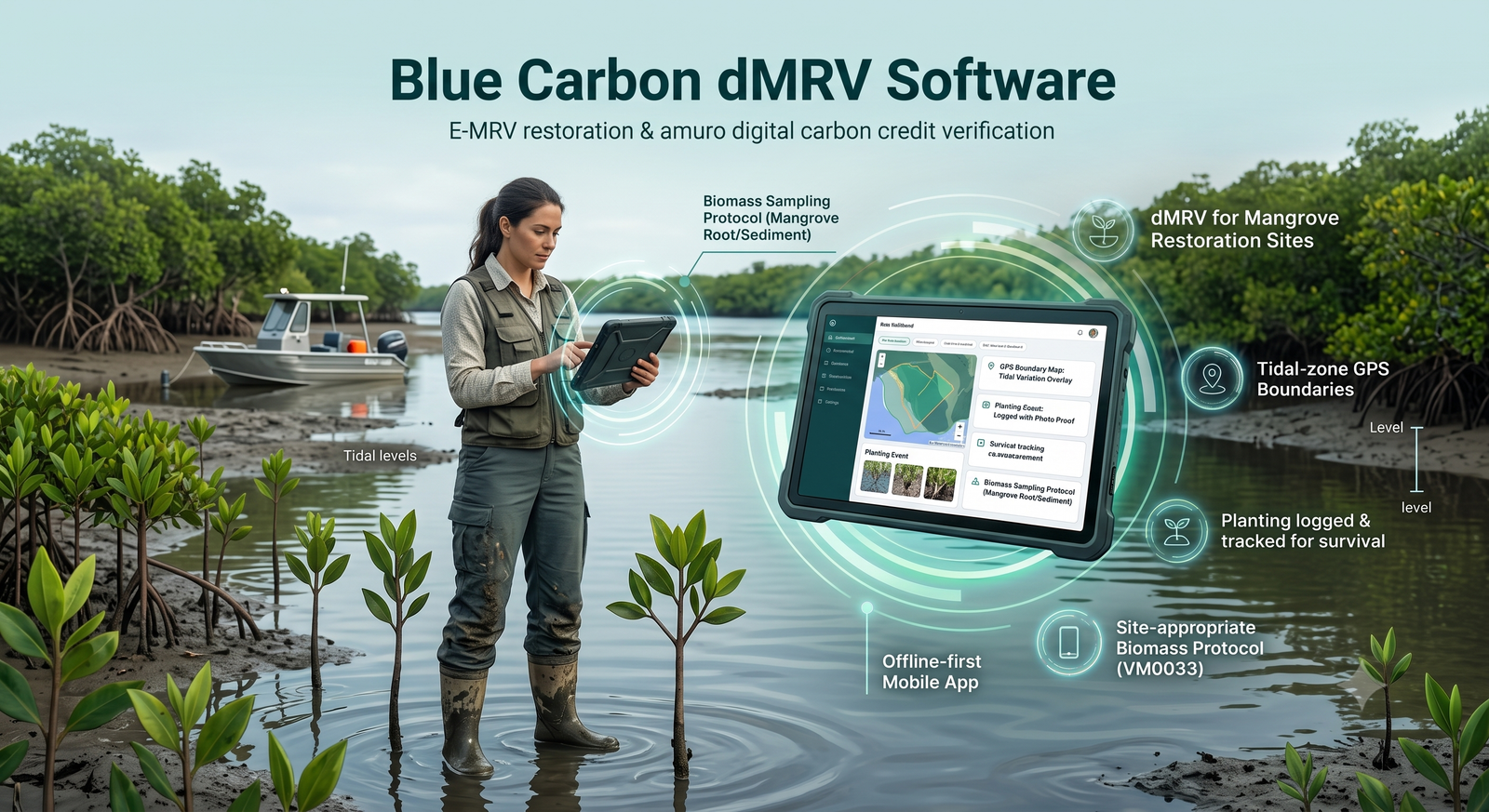
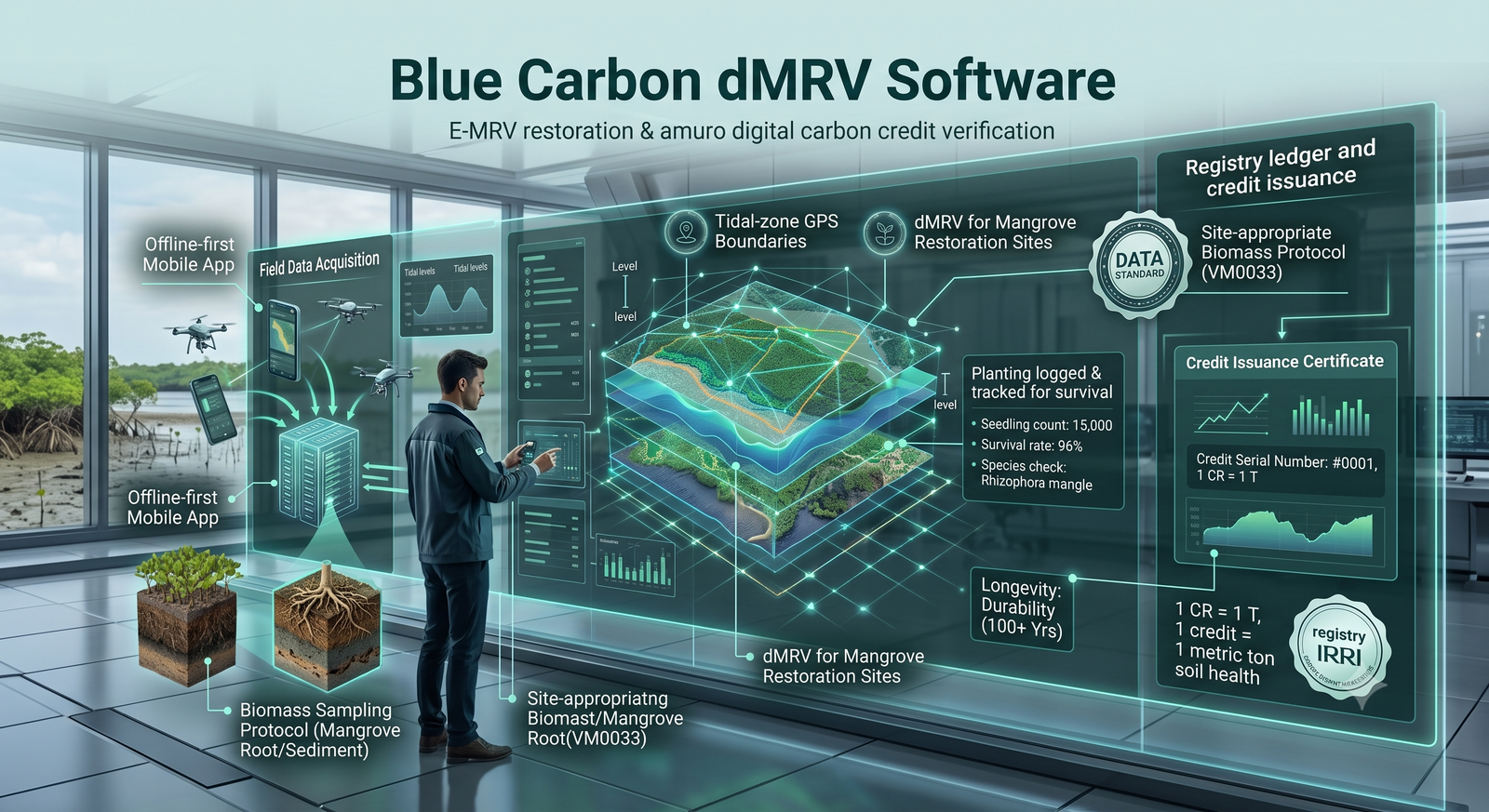
How the credit process flows for blue carbon
01
Map tidal-zone boundaries
Register the restoration site's GPS boundary accounting for tidal variation.
02
Plant and track survival
Log planting events and run survival re-measurement suited to mangrove growth patterns.
03
Run biomass sampling
Use a sampling protocol configured for mangrove root and sediment carbon, captured offline-first.
04
Export for verification
One evidence package ties restoration claims to boundary, planting and sampling records.
This is the same field-to-credit flow every methodology follows — see it explained in general terms on our impact page.
Why blue carbon credits get delayed or discounted
Almost every delay traces back to one of these four evidence gaps.
Static tidal boundaries
Tidal-zone boundaries shift with the season while the paperwork stays frozen on a single dry-day line.
Boat-only access
Sites reachable only by boat make verification visits rare — and every wasted trip sets the evidence back.
Mismatched survival models
Survival in saline, tidal conditions behaves nothing like terrestrial ARR, so borrowed assumptions don't hold.
Generic sampling templates
Mangrove root and sediment carbon need a purpose-built protocol, not a terrestrial-forest template stretched to fit.
Blue Carbon carbon credits — FAQs
Key questions about generating and verifying Blue Carbon carbon credits.
Does TrueCarbon support VM0033 for blue carbon projects?
The configurable field schema adapts to VM0033's coastal wetland data requirements — tidal-zone boundaries, mangrove-specific planting and survival tracking, and biomass sampling.
How does the platform handle remote, boat-access-only sites?
The mobile app is offline-first. Field teams collect data at the site regardless of connectivity and it syncs automatically once back in range.
Guides for other methodologies
Get started
Ready to start earning Blue Carbon credits?
Talk to us about your programme's stage — whether you're mid-registration or just scoping the methodology.